Showing posts with label business. Show all posts

Thursday, September 17, 2015

J&J: America's "most admired unlawful company"

Here's a multi-chapter story (2 parts published so far) about J&J, the company we know (and love) for no-tears baby shampoo, Band-Aids, Tylenol, etc. They make us feel better and healthier. But their low-margin consumer products division is only 9% of their profits, and their pharma/devices division is where most of the money (and controversies) are.

I interned at a J&J acquisition last decade, and of the 3 pharma companies I've worked at, I felt that J&J emphasized ethics the most. This is probably due to their "Creedo culture". Remember the 1982 Tylenol crisis where some guy in Chicago was opening up bottles and putting cyanide in them? That led to 7 customer deaths, and the voluntary development of tamper-proof drug containers by J&J that became the industry standard. That tragedy could have sunk the company (Tylenol's market share of analgesics initially fell from 35% to 7%... haha who were those crazy 7%, very loyal employees or people without TVs?), but J&J's leader at the time, James Burke, held the ship together and eventually restored their brand image. It is now a celebrated crisis mgmt. business case, and Burke won the Medal of Freedom in 2000 (I don't know if it was fully merited or not).

Part of their brand recovery plan was the drafting of the Creedo (written in stone like the 10 Commandments, and next to the Stars & Stripes), or guiding principles for what kind of company they should be. On paper is sounds very good and even inspirational (it was for a 23 year old): their order of priorities are customers/users, business partners, employees, communities, and lastly shareholders. Of course that challenged their fiduciary duty as a publicly-owned company, but the Board must have approved it. Maybe the thinking is that these stakeholders are not zero-sum; if you are good to patients and others, the money will also flow to shareholders (Merck says something similar). They drove these points home during new hire orientation, and also recognize employees each year who are especially faithful to the Creedo.

But apparently the "thought leaders" and businessmen (corporate criminals are overwhelmingly male) in the pharma/device divisions didn't really live it out on multiple occasions. I don't know how much "Creedo compliance" actually takes place - like are employees rated and comped for how ethical they are (how Google partly evaluates employees on their "Googleyness")? Doubt it. But maybe all of this lofty Creedo stuff is just a smoke screen to get patients, employees, and gov't to believe that medical companies are somehow more trustworthy and admirable than "regular companies" that just make widgets, because their higher mission is to save lives.

The record indicates that medical companies/providers are no more ethical than the rest of us, and are in fact also responsible for millions of deaths, billions in fraud, and countless injuries over the years (some preventable or willful). Sure, their net impact is probably positive, but the J&J case could be another big example why for-profit medicine does not lead to the best outcomes for society as a whole.

Wednesday, November 27, 2013

"Toxic Hot Seat" about cigarettes, flame retardants, and death for profits


Toxic Hot Seat:

http://www.huffingtonpost.com/marcia-g-yerman/toxic-hot-seat-ignites-aw_b_4338572.html

This is a clear example of Pope Francis' principle of greed-driven "murder", for lack of a better term. Some companies and trade groups decided to protect their profits rather than do the right thing for their customers. And this has created enormous social costs for everyone.


The storyline:


- Since the '70s, 2-6K Americans died each year from residential fires.
- By far, the biggest driver of these tragedies are unmonitored cigarettes (yet another way they kill users and bystanders), and this trend persists in most nations.
- A self-extinguishing cigarette is affordable and easily implementable, but the tobacco industry resisted, and created a "fire marshal" advocacy org to convince leaders and public that the problem was the "fuel" (household flammable stuff), not the ignition.
- So the chemical industry jumped on this and developed "flame retardants" that could be sprayed on curtains, furniture cushions, etc. (this was during the era of DDT and such where toxicity testing was nonexistent).
- In 1975, a professional study was warped by some CA regulators and lobbyists to mandate all furniture sold in the state to contain fire retardants with no health risk conditions. Since CA was such a big market, and it was expensive to develop 2 versions of furniture, manufacturers decided to put retardants on everything, and the standard has stuck.
- Despite a huge "astroturf" (fake grassroots) chemical industry push, Maine was able to ban retardants in favor of safer alternatives. The lobbying machine has prevailed so far in CA, and Representative Leno has sponsored several similar bills to ban them, but they failed each time due to the irrational fire scare and industry advocacy. Changing the law is part of Gov. Brown's current agenda, and so far he was able to at least permit the sale of furniture that doesn't contain retardants. It's up to consumers to check whether the products they buy have them or not, but an outright ban like Maine is still elusive.

Commentary:

So what are the consequences of big tobacco's greed/negligence and big chemical's opportunism (now a $5B global industry)? We know that preventing/reducing fire severity is important and can save lives/money. But are these retardants the most cost-effective solution? Studies show that smoke alarms and sprinklers are much more effective than retardants - with nearly zero downside. Only the retardant manufacturer association has produced a few suspect studies to support the use of their product. But fires are scary and their arguments won the day for decades ("whatever it takes" to prevent fires!). Fire danger is a lot more tangible and acute than nearly invisible carcinogens that may need extended exposure to do measurable harm (but no less bodily harm than burns). So it's easy to fixate on the fire risk, which may trump other concerns. 

It's one thing if retardants are ~90% effective (at least as effective as condoms), but they're not. The flame retardant standards state that the material must be able to resist a "small flame" for 12 secs. While that could be effective in some situations, it is deficient in many tests and in the field, because a furniture's unprotected covering burns first, so by the time it hits the cushions (that contain the retardants), it's no longer a small flame and the retardants are no longer effective.

So they don't really make us safer, yet they are likely making us sicker. Retardants are known carcinogens and mutagens like thalates, bromides, and BPA (that the baby industry has been forced to remove from plastic products due to customer anger). Retardant-containing products still burn, so when firefighters have to respond, they are rushing into and inhaling the chemical soup. When SFFD personnel were tested, incidence of middle-age female breast cancer was 6X the population average, and incidence of cancer among retirees was also unusually high. Parents groups fought to get these chemicals banned in child pajamas (on toxic grounds) and won, yet the exact same chemicals are still present in child car seats, play pens, backpacks, furniture, etc. that kids touch and lick. They're still present in those products because it's expensive to mount a legal challenge, and chemicals get the benefit of the doubt.

Speaking of that, why do virtually all side effects, interactions, allowable dosages, etc. need to be thoroughly documented and scrutinized for a drug to reach the market, but chemicals are "innocent until proven guilty"? It's about the burden of proof. As depicted in films like "A Civil Action", it is very hard to prove that a specific chemical directly caused measurable harm over what could be years of exposure to many chemicals. Companies can just show that rats "survived" when exposed to the chemical under specific, arbitrary conditions - and that is supposed to prove that they are universally safe.

And when pro-business leaders continually weaken and defund the EPA and other regulators, that makes them look ineffective/unnecessary and strengthens the industry argument to just trust the companies, not delay new product approval with frivolous tests, and not stifle chemical innovation, which "creates jobs/revenue" and "makes our lives better". And this is not just about retardants, but literally thousands of chemicals that we don't even know we're exposed to each day. Like all those "dispersants" used by BP to make the Gulf spill look less nasty to the naked eye - we have no idea WTF they do to living tissues over time, and they will likely show up in seafood, breast milk, etc.

There is an underlying assumption that benevolent gov't is watching out for us, and products wouldn't be on the shelf unless they were totally safe (and Dow and Monsanto say you can trust them). Well after leaded gas, asbestos, CFCs, and the sad history of tobacco, we should know better. The only ones who are looking after public safety are scientists, survivor victims, and grassroots orgs. And politicians will only listen to them if voter anger outweighs industry lobbying dollars. But this is obviously short-sighted leadership. It makes no sense to threaten and poison future society's health and productivity for present-day industry profits. Taxpayers and gov't coffers will be burdened by the health costs of harmful chemicals, which means less money for other national priorities. Everyone loses but the companies and their stakeholders.

The same thing is playing out in places like China with pathetic regulation, but they recognize this and are trying to improve. Can you imagine the impact on their economy when their current population ages and disproportionately develops all sorts of illnesses from the ubiquitous pollution, toxins, etc.?

And it's not like these "innovative chemicals" are so critical to human survival. We can get along fine with many natural, renewable products like wool, plants, and wax. We don't need chemical X to make our jacket down 0.1% warmer but our kids 10% sicker. Someone has to say enough is enough.

Tuesday, June 5, 2012

Stanford and Silicon Valley

http://www.newyorker.com/reporting/2012/04/30/120430fa_fact_auletta?currentPage=all

"...so many [Stf students] will take the exhortation to occupy Wall Street quite literally after graduation. So before making any decision, we ask one, very simple question: What will I get out of it?”- Stf senior in the Daily

Despite the title, this article is more of a guided tour of Stf rather than criticism of Stf's ties to business (apart from the obvious C.O.I. implications and threat to the "pure learning and personal growth" objective of a college education, but these are not unique to Stf). I do think that there is legit concern that Stf is becoming too monolithic and engineering-heavy, but that's where the $ and headline-grabbing innovation is happening.

--------

http://www.kqed.org/a/forum/R201206051000

The guest did mention that for East Coast schools, people would cry foul if a president/chancellor had such overt ties to companies as Hennessey does (if only he had ties to Hennessey Cognac and LVMH group!). Not sure what he bases that on, but at Stf I guess it's no biggie. Every big shot there who isn't a Spanish prof has some connections to some company.

The guest also compared how Cal's endowment is miniscule compared to Stf's, and Stf on paper is actually more racially diverse than Cal. But that doesn't take economic class into account. I am sure that you fellow alum would agree that while Stf had many people of color and foreigners, they (we) often came from upper-middle-class to rich backgrounds. So they (we) probably have more in common culturally with wealthy whites than with rural and/or poor minorities (who may have trouble adjusting to the Stf scene?). A good % of students at Cal are the first in their families to enroll in a top school, or even college in general. UC is more of a way to move up in society, whereas Stf is for the kids of people who have already made it (stereotype I know). 

---------

When the host (Dave Iverson, also a Stanford graduate) stated that Stanford is more diverse than Cal my thought was the same (that the measure of diversity being relied upon to make the claim is not multi-dimensional); nevertheless, it's not the type of claim I would expect to hear on NPR!


I think your email brings up an interesting point... but that point might be transient.  At present Stanford might actually be more affordable for low-income families; given the ties to industry and the alumni network it might also be more likely to afford a given individual a "leg-up" in the world.  Of course, if the "Middle Class Scholarship Act" is passed the reality would be closer to the historical truth.
--------
Reflecting on the classmates I met at Stf, my family was probably in the bottom quartile of wealth there, and you know that I had a fairly comfortable childhood. But privileged upbringings don't necessarily lead to social and self awareness. College is a good time to develop that as part of the maturation process, so spending 4 years in the "Stf-Paly bubble" may actually be a handicap for the rest of the student's life. But since Stf alum usually have financial means, they often can afford to engage in supplemental self-discovery activities like traveling the world, volunteering, and/or attending grad-professional schools - while public school students may need to rush into the rat race (if they're lucky enough to land a job) to support their families and pay back loans.

If business and political forces didn't perpetrate a massive transfer of assets from public service institutions to private elites (exacerbated by the recession), then maybe schools like the UCs would have more $ to maintain a quality educational experience and financial accessibility to the average student. But instead, many public schools are privatizing to some degree in order to cope with financial realities, thereby losing some essence of what made them special and egalitarian. As you said, it's true that Stf financial aid will literally work things out with any student's family so they pay only what they can no matter their situation. It's very generous, but that's not the problem - the bigger challenge is getting accepted at Stf first (admission rates are one of the lowest in the US, much worse now than when we were students - I think it fell from 15% to 8%). And in order for that to happen, you need legacy, connections, and/or demonstrated student excellence. All those come easier with wealth. Stf has a new fin aid program for families with household incomes below $100K (Ivy League has similar). So that is basically the plan for the 99% (well 80% actually). I wonder what the median family income is at Stf. vs. Cal. It could be 2X, and it's not like Cal families are poor.

http://news.stanford.edu/news/2009/april1/stanford-admission-rate-2013-040109.html
http://blogs.wsj.com/economics/2011/10/19/what-percent-are-you/?mod=wsj_share_twitter

Stf enjoys more donations partly because of their business partnerships (firms give because they want access to student and professor talent) and the quality of their people generate more IP royalties and alum charity. But also Stf's prestigious and large endowment gets access to prime investment opportunities that smaller institutions and maybe even the UCs can't tap. So the rich get richer. Iverson and the guest seemed to suggest that this is partially due to Cal's liberal, populist "bias" and Stf's conservative, pro-business appeal - the giants of Wall St. and Si Valley are turned off by Cal. Both schools are good at most things, but Berkeley has a rep for excellence in physical sciences, humanities, etc., while Stf may be better known for engineering and professional education, which are more relevant to businesses today. So I don't blame the VCs for preferring to tap the Stf pool over Cal, but it's just too bad that equally good if not better students and faculty at the UCs get less access to partnerships, jobs, and other opportunities.

Those with privilege shouldn't work to amass more privilege, especially at the expense of others who are deserving - I think Leland Stanford would agree with that (the later-in-life philanthropist Mr. Stanford, not the robber-baron Mr. Stanford). Those who make it to the top should send the elevator back down for others. Buildings at Cal are literally crumbling, classes cancelled, and staff are getting furloughed, while Apple gave Stf $50M last year (investment, not charity LOL) and Phil Knight donated untold millions to his alma mater to build the nicest b-school in the world (http://www.gsb.stanford.edu/about/knightcenter/). Why give charity to the rich? It's part of the bigger national issue. So of course Stf has the luxury to look all generous and righteous, allowing students whose families make under $X to attend for free (but what % of students is that exactly?). They are only able to be so "generous" because they exploited huge advantages in the zero-sum game vs. other schools (esp. public schools who are burdened by much more bureaucracy and uncertain budgets). 

Monday, September 5, 2011

Worker disengagment and poor management are very costly

Here's another doozy about workplace dysfunction from the NYT:


http://www.nytimes.com/2011/09/04/opinion/sunday/do-happier-people-work-harder.html?_r=1


"Since January 2008, ...Americans now feel worse about their jobs — and work environments — than ever before. People of all ages, and across income levels, are unhappy with their supervisors, apathetic about their organizations and detached from what they do. And there’s no reason to think things will soon improve... Gallup estimates the cost of America’s disengagement crisis at a staggering $300 billion in lost productivity annually."


Wow, that is bigger than the GDPs of most nations.


I don't get why firms seem to just accept this. This is big money. Even if the "touchy-feely" worker motivation stuff is probably beneath most execs, the middle and lower managers just don't ask the necessary questions (or are too busy to pay attention), and no one is holding them accountable if they don't. No one likes the "adult babysitting" part of management, but if you want productivity, loyalty, and high-functioning groups, this is probably the most direct and effective route. Corny rah-rah speeches at all-hands meetings (that usually do not resemble reality) and sending out cliched worker satisfaction surveys (yet not acting on the findings) only hurts morale further. Are leaders smoking something, imagining that their departments are perfect utopias where workers always come pumped up to give their best (because of their brilliant leadership, of course)? And obviously it's about more than compensation.


Some managers are awesome, but others seem generally clueless when it comes to knowing their workers. They make threats, falsely promise or delay rewards, and set unrealistic goals, and as they watch their people scramble to meet them, they think it's validation of their good leadership. Wow, look at them go for me, and I didn't even need to bribe them! Some managers think (or make it appear) that their groups are high performing despite heavier burdens on them, but they never ponder if that is the best way. And I don't mean, "Can I squeeze even more out of them?" It's a tough climate for job-seekers now, but that shouldn't be a green light for managers to abuse captive employees and impose unreasonable expectations. "It's dog-eat-dog out there and we have to get tough to survive." Well a lot of sick, immoral stuff has been justified that way over the centuries.


I think especially in the tech fields, emotional IQ is so lacking and there isn't a serious effort at manager training/improvement monitoring. Sure it's a two-way street and workers share some blame for not speaking up and proposing solutions, but due to asymmetric communication and reputation implications, this can be nearly impossible to pull off. Basically, bad managers and management systems aren't getting fixed because (a) workplace culture from the top down doesn't take employee satisfaction seriously, (b) the higher bosses don't collect the right data to evaluate management skills and incentivize improvement, and (c) it is too risky or difficult for workers to inform the proper parties on their managers' shortcomings. Blind leading the blind kind of stuff.


Management seems to prefer to reorganize, rotate VPs, and alter budgets (to make it look like they've got a plan), instead of getting to the roots of employee dissatisfaction - which seem to be plainly obvious and intuitive, so it's not like a Herculean feat. They just aren't willing to give what the workers need. Or maybe some managers are more concerned with their own career advancement, politics, and other BS, so they want to hoard credit/attention and don't allow their workers a chance to take on more responsibilities, feel more engaged, and get noticed, all of which strongly correlates with job satisfaction and productivity (workplace creativity, a critical part of business success, is highly correlated with positive mood as well). Maybe it's some subconscious, antisocial behavior where managers can't help but keep their people down to satisfy their insecurities, like frat hazing or abusive parenting.


Maybe firms like Google (with plenty of super-smart but bad managers I'm sure) are trying to get on the right track. Use data-driven methods to improve management and worker engagement. Try to close the gap between a manager's false assumptions and what workers truly feel (and what is actually happening on the ground).


http://www.nytimes.com/2011/03/13/business/13hire.html

Saturday, June 19, 2010

Economist compares Obama to Putin over BP

http://www.economist.com/node/16377269?story_id=16377269&source=features_box_main

I know The Economist philosophically supports the free market and neo-liberal capitalism, so I guess they wanted to come to poor BP's defense after the angry American mob grilled stonewalling Tony Hayward (Dickens would call him "Tiny Tony") in a public spectacle. How dare the descendants of colonist farmers show such disrespect to their mother empire! The Economist had the nerve to compare Obama to Putin over this matter. Obama's been called a lot of horrible things by a lot of stupid people since he hit the mainstream, but that's a new one. Obama is not harassing BP to "do his bidding" for his own lust for power and personal gain, as Putin does. He is prodding them to own up to their responsibilities, repair as much damage as can be repaired, and compensate all who have unjustly suffered for their mistakes. Because as we have seen from previous corporate disasters, companies will do all they can to delay and minimize payments (sometimes for decades). And are we surprised? That is what they exist to do - maximize production and profit, minimize loss.

Sure Obama is trying to score political points in the process and use the crisis to push his clean energy agenda (which may be offensive to some voters), but that isn't really hurting the country, unlike the previous administration giving energy companies the green light to regulate themselves. Yes his secretary Ken Salazar vowed to clean up the corrupt culture at DOI, and doesn't have much to show for it over 18 months, or at least not enough to have averted this disaster. So sure, BP is not 100% at fault. Westerners, and particularly Yanks, are addicted to abundant, cheap energy (we are now reminded of the true costs of "cheap energy"). Our leaders took industry money, gutted regulations, and got out of their way. But the bottom line is no one forced BP to tell Transocean to drill in an unsafe manner, low-ball the oil leak estimates, and half-ass the clean-up effort.

I understand that the Economist would want to remind us that BP's mistakes should not be an indictment of business as a whole. Have they been living under a rock for the past few years? Look how "big business" has performed in our lifetimes (and especially since Obama took office), and maybe they do deserve a blanket indictment. I'm not talking about the mom-and-pop restauranteurs, veterinarians, or freelance architects of the world that just want to make a living and provide great customer service. I'm talking about the big corporations who spend millions courting politicians, even to the point that the biggest oil money recipient in Congress, GOP Rep. Barton from TX, went so far as to open the BP hearings by apologizing to Hayward for his government's angry rhetoric and "shakedown". The companies that give their inept, short-sighted executives huge compensation, globalize their businesses to tap slave-wage labor markets and nonexistent regulatory environments, layoff thousands to appease Wall Street, and in many cases, commit fraud and break the law.

http://news.yahoo.com/s/ynews/20100617/ts_ynews/ynews_ts2660_2

Plus it seems that the bigger or more prominent the corporation, the worse their infractions. Toyota and GM are the biggest auto makers on the planet, and Toyota's quality control practices were hailed and replicated the world over. One problem, in their manic quest to rapidly overtake GM, they forgot their own teachings, and initially denied everything rather than fess up to their responsibility for putting some drivers in mortal peril. GM once ruled their industry, and millions depend on them for their livelihoods. But last year they were reduced to taking government handouts, even though tiny Hyundai posted record sales (so you can't just blame the recession). Fortune magazine gave Enron the title of "most innovative company" for 6 straight years (even Kobe Bryant couldn't win 6 straight titles), and we know how that turned out. Goldman Sachs is one of the best-performing and shrewdest firms on Wall Street, and now they are under investigation for multiple infractions. The world's biggest pharma, Pfizer, had to pay the biggest government fine in history (at the time), for improper drug marketing. Massey Energy, one of the biggest coal miners, permitted lax and negligent safety standards, which claimed the lives of dozens of its workers. And now BP, the world's 4th biggest oil company, has presided over the worst environmental disaster in the New World, stealing the dishonor from the world's biggest oil company, Exxon, after the Valdez spill. The list goes on and on.

One can argue that the sheer scale of these mega-companies makes it more likely that there will be some sort of problems under their umbrella, vs. smaller outfits at least. But their oversight/safety/compliance infrastructure should grow with the rest of the business. A 200 pound person can't survive with a child's kidneys. These businesses I mentioned may be too big to fail (apart from Enron), but maybe they're too big for their own good too. As Hayward said, he was "out of the loop" regarding the Deepwater Horizons drilling project. Many of the big banks caught in the subprime crisis claimed that they had no idea they were even dealing in those securities. When a company's leader has no idea what his or her company is doing, maybe that company needs to rethink the way it does business. I know one CEO can't micro-manage a billion-dollar organization, but the chain of command and communication should at least include the execs. Otherwise you just have a chaotic, out of control, short-term-profits-driven entity that is under tremendous pressure from shareholders, employees, and investors to cut corners and cheat to make more money.

In the Olliver Stone film "Nixon", the president confronts an anti-war protester. Both want the Vietnam War to end, but Nixon explains that it's not so simple because of the complex military establishment. The protester said it sounded like a beast that can't be controlled. I hope that is not what big business has become, but many warning signs point to it. I know that big corporate disasters and fraud are still relatively rare (the ones we find out about at least), and many companies follow the rules and behave ethically. But just because disasters like BP and Enron were possible in our free market society should be enough cause for alarm for us to rethink our entire economic system. I'm not saying a command economy would be any better (see North Korea), but when the status quo is failing, we have to contemplate alternatives. Unlike The Economist, I feel that it's better in this case to over-react to a potential problem rather than pretend none exists and the system is working fine.

-------

You've omitted the primary reason they make the comparison.  This should be a republic, a nation of laws and not men.  Instead of pursuing the law, Obama is calling BP into his office to strong-arm them into extra-legal requirements: for the good of the nation, or for his own political good, depending on your spin.  But good or bad, it's outside the law, and that's why the Economist comments that the "collapse in BP’s share price suggests that he has convinced the markets that he is an American version of Vladimir Putin, willing to harry firms into doing his bidding."

-------

No, the collapse in BP's share price is due to their spill and poor damage control thereafter, both of which Obama had nothing to do with. BP's stock price actually went up on June 16 when Obama met with BP execs to "strong-arm" them into agreeing to open the $20B escrow account (from $30 to almost $33). And the next day the share price held pretty steady at $32, so maybe investors were just happy that some sort of positive agreement was reached. So the data don't support the Economist's claim.

We are a nation that respects the rule of law, but we have no laws to date to handle an environmental disaster of this magnitude. If the $20B account is extra-legal, then BP doesn't have to agree to it. Deals are cut all the time in Washington, and sometimes what's good for the politician/party is also good for the country. Obama doesn't strike me as the shake-down kind of leader. BP would only agree to the $20B account if the alternative was worse (criminal action maybe?). Maybe Obama threatened to revoke BP's drilling leases on Federal land or confiscate assets. Both actions are completely LEGAL and acceptable for a president to do considering BP's horrible safety record in the last 10 years and their duplicity in their promises to improve (see the long ProPublica article below if you're curious).

I find it amusing how some people in the media/politics are getting so outraged about Obama "kicking around" BP (ostensibly for petty political gain, and not because it's the justified thing to do), yet they don't seem to exhibit a similar level of anger over the worst environmental disaster in American history that is affecting at least 5 states and millions of people/jobs for decades. And the critics seem to forget that Obama was pretty calm and rational during the first month of the spill, almost to a fault, and didn't take it to BP when he could have.

http://online.wsj.com/public/quotes/main.html?type=djn&symbol=BP
http://www.propublica.org/feature/years-of-internal-bp-probes-warned-that-neglect-could-lead-to-accidents
http://www.npr.org/templates/story/story.php?storyId=127561853

-------

Regarding the share-price question, I look at http://www.google.com/finance?q=NYSE%3ABP and see the stock closing at 31.40 on the 15th, 31.85 on the 16th, and 31.71 on the 17th, so effectively no change.  More interesting is that on the 16th, a CDS on BP's debt jumped 400 basis points, from 600 to over 1,000.  http://www.zerohedge.com/article/bp-cds-curve-goes-nuts-1-year-passes-1000-bps-no-offers-market  Basically, the cost of insuring against BP defaulting (bankruptcy) increased almost as much on June 16th as it did over the previous two months.  The market thought the chance of BP ceasing to exist was a lot higher on the 16th than on the 15th.

I agree that the spill is absolutely outrageous.  But the problem isn't just BP, and focusing just on BP isn't going to fix it or prevent it happening again.

Why weren't there laws in place?  This isn't the first time there's been a big spill in the US, nor the first time that BP's created problems - they had 760 pre-spill OSHA violations, something like 97% of oil-industry violations (http://www.businessinsider.com/bp-has-been-fined-by-osha-760-times-has-an-awful-track-record-for-safety-2010-6).  Why weren't they more closely regulated?  I'm sure you've seen that BP's Gulf Spill Response Plan was so unbelievably shoddy that it listed walruses as a local species (http://www.americanscientist.org/science/pub/bps-gulf-spill-response-plan-lists-walrus-as-local-species): what regulator signed off on that?

The ideal situation would have been that lawmakers in DC identified these problems and put laws into place to handle this situation.  That's a failure of leadership.  Big companies have been profit-driven since Adam Smith: why are we surprised by this?  Look at Standard Oil, or the big railroads of the past.  The job of government is to put the rules into place to set the proper incentives for those companies.  Instead, we have no laws to handle this situation.

The second-best situation would be to start putting those laws into place now.  Fix the regulatory scheme.  Reform tort law: why does the Oil Pollution Act limit the legal damages from an oil spill at a hilariously-low $75M (http://www.lawsuitfinanceblog.com/2010/06/bp_disaster_highlights_that_to.html)? 

Even better, turn this energy and fury into a change in American energy policy.  That would be real leadership: refocus popular anger from the short-term immediate cause to real long-term change.  The simple reality is that America's use of oil contributes to this.  The amount of oil spilled in the Gulf gets spilled *every year* in Nigeria (http://www.boingboing.net/2010/06/14/more-oil-spilled-in.html).  We only get upset when it's in our backyard.

Instead, we've got Obama publicly shaking down BP.  That's certainly easier: westerns work better when one guy has a white hat and the other has a black hat.  But it's not leadership, it's public theater.  And it ensures that this will happen again.

To be clear, I do think BP should go under as a result of this.  Given their current cash position, I don't think that's impossible.  They have a big line of credit from JPM right now ($50B) which could keep them afloat, but with CDS spreads widening and the various debt problems in Europe, I wouldn't be surprised to see JPM pull that.  They have something like 13B in cash and another 10B in yearly profit, but if the estimates of daily oil spill increases, or they don't fix it, their liabilities could be much higher.  Then we might get to see whether BP is too big to fail (it's like the too legit to quit of the 21st century!).

I'd just like to see the blame and fixes extend beyond just blowing up BP :)

-------

Thanks for the links and your comments!

I don't think this crisis is about putting BP in front of a firing squad like that inmate in Utah. I think it is about them owning up to their responsibilities for the damage they caused to the US and its people. We allow them to do business in our country with certain expectations, and when they fail to meet their obligations, some punishment is in order. BP and its execs have acted pretty callously and unapologetically for the first 1.5 months of the crisis, and now the best they can give us are alligator tears before going to a sailing regatta. The people and Washington don't appreciate that. Yes, maybe we're using BP to score political points and serve as a warning to other would-be violators, but as you said, destroying BP won't help us avoid another disaster, and won't bring the Gulf back. But let's remember that there's a good chance BP will be just fine in a decade, since much of their business is outside of the US, and they can write off all their fines and penalties. Everyone predicted the death of Exxon after Valdez.

FDR also made public spectacles and called out big industry and the banks whose business practices led to the Depression. From the NYT: Mr. Obama wanted to transcend partisanship. Instead, however, he finds himself very much in the position Franklin Roosevelt described in a famous 1936 speech, struggling with “the old enemies of peace — business and financial monopoly, speculation, reckless banking, class antagonism, sectionalism, war profiteering.” And that’s not necessarily a bad thing. Roosevelt turned corporate opposition into a badge of honor: “I welcome their hatred,” he declared.

As you said, during last week's BP-Obama meeting, the closing price was pretty much unchanged, so their stock didn't "collapse" in response to the $20B settlement that Vlad Obama forced upon them. But as I said, during the day of the 16th, the stock went up, not down. So if the meeting was so disastrous for business confidence, the share price didn't reflect that. Regarding the jump in basis points, that's how third-party bankers evaluate BP's prospects. Their debt status is near junk like Greece, but it may be irrational and inaccurate. It's just a guess, and has little to do with BP's actual financial viability and obligations to the US government. As we saw during the credit crisis, debt rating agencies were way off target and contributed to the collapse. BP and Greek debt are still much safer investments than a lot of stuff out there.

No one ever said the problem was all BP. In multiple emails I said it was also on the oil-thirsty public and our high-consuming way of life (not to mention our out-of-sight-out-of-mind political mentality), and also the lax regulators and politicians who took oil money and let the companies police themselves. But in this case, the spill is 100% the fault of BP and Transocean. Obama didn't blow up the rig. Problems with the cleanup and repair effort are on the industry and government both. But for the spill, I don't think BP can come out and blame the government for not regulating them better. Because that is an admission of their own incompetence (even though they assured everyone that they had deep water drilling down to a near-foolproof science), and contradicts the oil industry's efforts to ease regulations and expand drilling over the last decade. "It's not our fault, the government should have watched us more carefully!" Well they're not allowed to pull that excuse when they're the ones who told the government and public that everything was fine and to leave them alone.

As you probably know, pro-oil legislators wrote a loophole in the offshore drilling permits process. Regulators have only 2 weeks to review and sign off on drilling proposals before companies are allowed to start their projects. Everyone damn well knows that the MMS is understaffed, undertrained, underpaid, and the ones that do make decisions are often pro-oil former industry lackeys looking to buddy up to companies to earn a cushy return to the private sector. There is no way they can read thousand-page reports with complex data in 2 weeks. So essentially, it's like they don't even need to get an approval. This is the fault of industry lobbyists and corrupt public "servants". Energy extraction should be as scrutinized as financial accounting and food/drug safety (and we're still not perfect in those areas).

I completely agree with the need to have newer, better, stricter laws on the books. But we're just 2 months after the rig explosion. It's going to take Congress some time (universal health care took over a decade after all). We're still collecting the data, and the GOP are being assholes every step of the way, pulling the "government stifling business and taking away our rights" card every chance they can. But we can't have it both ways - either we want to roll out strong, effective, rational regulation of businesses in the national interest, or we just accept the status quo with the conservative ideology of deregulation and short-term profit-taking. If we have to temporarily trample on the rights of the "poor, defenseless corporation" when real flesh-and-blood people are getting screwed, then that's a sacrifice I'm willing to accept.

I don't think Obama will rest now that he has "shaken down" BP; that was never the end goal. Of course he used this occasion and his prime time address to stress the need for energy alternatives, and he will continue his push for a greener economy like he promised years ago on the campaign trail (of course the energy industry will fight him tooth and nail). He was under fire for not getting madder about the situation, so he responded. Maybe he went too far with the $20B, but the Dem Congressional leaders were also involved, and we'll let the historians decide in the future There were some concerns that BP would drag its feet to "honor all legitimate claims", so he cut through the red tape and made sure the victims got some help before the next ice age. He works for the people, not BP. The money is part of the process, but not the objective. Give Obama some credit, I think he knows that we have to change the way we do and regulate business so that we're less dependent on risky energy exploration and have more peace of mind that strict safety measures will avoid catastrophes. As you said about Nigeria, it is also sad that our dependence on imported oil conveniently allows us to ignore all the environmental and social harm energy extraction causes in the Third World. Well once we have more energy flexibility at home, we can be more selective with our sources of imports, and hopefully boycott the companies and nations that commit gross violations.

-------

I thought it was pretty clear, as per a speech given by Obama, that he WAS using this as a stepping stone to a new improved energy policy focusing on clean and sustainable energy, is that not the case?

And if i had to address point 1, why weren't laws in place?  I would say that it is because businesses own government on this kind of thing.  Kind of addresses the difficulty of point 2, make some now.  

I think t's point of washington deal making is what makes or breaks the Putin reference.  The understanding is that when Putin makes a deal behind closed doors, it was an offer you couldn't refuse.  I don't think we believe that is the case with Obama.  It may ACTUALLY be the case, which would make him Putinesque for sure, but i don't think that is public perception at this point.
--------
Thanks M, that was my point exactly regarding the difference with Obama and Putin. Plus BP has an army of litigators who are much better than government lawyers, so if Obama played hardball with them and overplayed his hand, they would find a way to roast him for it.

For all we know, the $20B fund may be a LUCKY BREAK for BP. As J said, they made over $10B in profit last year, and their cushy royalties agreements with the government mean that they shortchange the American people millions each year too. Maybe they won some government concessions and guarantees that they wouldn't revoke their licenses or whatnot. History has shown us that oil companies often escape full punishment, and I wouldn't be surprised if their allies in government helped them this time too. 
Thanks for your comments, G. I'm proud of Obama for doing this much so far and not being scared to be publicly anti-business (at least corrupt business). Actually my "approval rating" for him is the highest it's been since his inauguration. He didn't want this crisis; it's distracting the government and people from all his other policy initiatives. But he's doing what he can to fight for the victims and use the crisis to show us how we have fallen so far during the Bush years. We need more regulation (as if the recession wasn't proof enough), and cleaner ways of getting energy - plus we need to use energy more sparingly, which I wish he would stress more, instead of riding around in a big motorcade of Chevy Suburbans. And I hope he would use the BP crisis to show how horribly the GOP is behaving and how they are truly bad for America. As if health care wasn't bad enough, the GOP are just acting outrageously regarding BP and the financial reform bill. He's got to nail them to the cross for this, and even dare to call them unpatriotic (they called the Dems that during the War on Terror anyway).

------------

To add to this, I think no one (at least no one I've read) suggests that BP shouldn't be fully liable for all costs that result from the spill. As long as the escrow account is only used to pay all the legitimate damage claims that result from the spill (and, if it turns out to be less expensive than $20 bil, the rest is returned to BP), then the escrow account, on a net-net basis, doesn't really change BP's ultimate cash position.

What it mostly does is in the name of efficiency. First, it saves a lot of litigation and time costs on both sides. If BP doesn't set up the escrow account, then the government would have to sue (assuming BP initially refuses to pay), or keep sending individual bills to BP. Likewise for private parties. It is therefore in both parties interest to set up some means of expediting claims (if you assume BP actually is interested in a good-faith effort to pay legitimate claims and not on releasing packs of lawyers to try to get out of every damage payment).

I think ultimately the escrow fund is a pretty minor achievement by Obama (not that he's in a position to do much anyway). For it to be a Putin-esque style shakedown, it would require Obama forcing them to hand over private shares/monies to the government without compensation. Instead, he asked them to set aside some money on a contingency basis to meet all legitimate outstanding damage claims against them, to be refunded to them in the event that the fund is not exhausted. Any competent corporate bod/executive does this anyway for expected litigation costs, they just don't publicly make deals with the president to do it.

Basically, Obama gets some face for making BP do "something". BP does what it was going to do anyway (set up a contingency fund) and gets some positive press for "owning" the disaster. I think that's probably why the stock price was largely unaffected: the agreement doesn't really mean much one way or another for BP's ultimate fate. Maybe it spooked some bond investors by the size of the fund, but that has to be because BP is revealing to the market information about how much it thinks the damages may be, not because the government "shook them down".

---------

I think your reply is very well stated and sums up my feelings to a great extent.

One thing to note about the CDS market is that volumes are *way* down (like 90%) from the highs in 2007 so you do have a point about the pricing perhaps not being as aggressive as it could be (though I should mention that CDS prices are based on mathematical models and it might be a bit haphazard to characterize them as nothing more than a guess)...

PS:   I think you're right about blame for the disaster but I have a feeling of dismay to think that only now (2 months later?) the media is talking about how the redundant control mechanism was compromised (i.e. there was only one of two working safety mechanisms) and that no one seems to be asking why the safety systems aren't passive control mechanisms (like the kind in a nuclear reactor) rather than active control mechanisms.

PPS:  I think the administration can't be blamed for the clean-up; once a disaster has occurred there isn't much that can be done (especially when the technical challenge is the thing requiring management).  The government can definitely change the shape of the incentives which are in place and the regulations which give rise to the systems which are utilized in practice... but come on - Bush was the oil man, not Obama!

Monday, May 26, 2008

Hilarous business gaffes


Highlights from the "101 Dumbest Moments" in business:
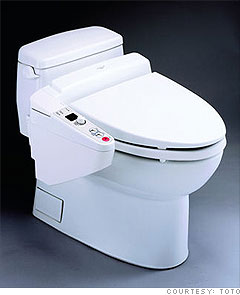
7. High-tech toilets
Too bad nobody gave one of these to Chuck Prince
Japanese manufacturer Toto apologizes to customers and offers free repairs for 180,000 high-tech toilets - thrones that feature heated seats, air purifiers, blow dryers, and water sprayers - after at least three catch fire. "Fortunately nobody was using the toilets when the fire broke out," says a company spokesman. "The fire would have been just under your buttocks."
High-tech toilets
15. Bindeez
But officer, it was the Toy of the Year!
Australia's Toy of the Year, a bead toy called Bindeez made by Moose Enterprise, is pulled from stores after scientists discover that the beads contain a chemical that converts into the date-rape drug GHB when ingested. [was that China's fault?]
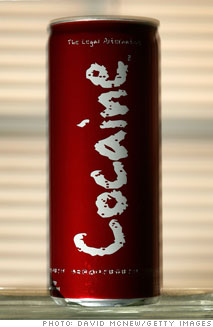
17. Cocaine energy drink
Quite a blow
After receiving a warning from the FDA, Redux Beverages agrees to stop calling its energy drink Cocaine. It changes the name first to Censored, then to NoName.
Cocaine energy drink
22. Co-op Funeralcare
That no-good Uncle Bertie is finally doing something useful
Co-op Funeralcare, a funeral home in Dunfermline, Scotland, says it is investigating reports that employees routinely used the cremains of the departed to keep passersby from slipping on icy sidewalks. "There's every chance people living nearby will have walked through the remains," an ex-employee says. "Some of them probably even inhaled them."
30. James Cayne
Remarkably, he has yet to be weeded out
In July, as Bear Stearns executives futilely attempt to prop up two hedge funds that ultimately collapse amid the subprime meltdown, CEO James Cayne spends ten of 21 workdays out of the office, playing golf and competing in a bridge tournament in Tennessee. According to The Wall Street Journal, his fellow bridge enthusiasts claim that Cayne sometimes smokes marijuana at the end of tournament sessions.
33. Oral B
And we just thought our wives were really into oral hygiene
Lawyers representing Procter & Gamble send a 66-page cease-and-desist letter to British sex-toy company Love Honey, demanding that it stop using images of its Oral B electric toothbrushes to promote a product called the Brush Bunny - a rabbit-shaped piece of plastic that slips over the top of an Oral B to turn it into a vibrator.
36. Best Buy
Let the Best Buyer beware
The state of Connecticut sues Best Buy for setting up in-store kiosks set to a website that looks identical to bestbuy.com but lists higher prices than those they would actually find online.
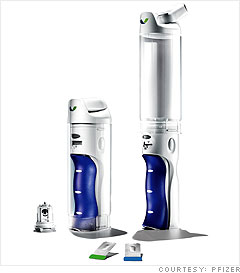
42. Pfizer
They had such high hopes
Predicting a blockbuster, Pfizer introduces the diabetes drug Exubera, a form of insulin inhaled through a tubular device. It's quickly dismissed as a "medicinal bong" by a prominent diabetic blogger, while the president of the American Diabetes Association, citing lung-function risks, says, "I see it as my job to talk people out of it." Pfizer quickly gives up on the product, taking a $2.8 billion write-off.
Pfizer
46. Johnson & Johnson
And if those guys in Rome don't stop using our logo, we'll nail them too
Johnson & Johnson sues the American Red Cross for infringement of its trademarked red cross. [where's the love?]
49. German screw factory
The red-light district in Amsterdam immediately closed
A worker in a German screw factory smuggles out 2,000 to 7,000 screws per night, ultimately stealing more than a million units. He sells the screws below cost on the Internet, artificially depressing the entire screw market.
50. The Defense Department
Makes you wonder what it would cost to ship a million German screws
Exploiting a flaw in a Defense Department purchasing system, South Carolina parts supplier C&D Distributors rakes in $20.5 million in shipping fees on just $68,000 in sales. The scheme is finally detected when a Pentagon clerk spots a $969,000 bill for shipping two 19-cent washers to an Army base in Texas. [I wonder how many other fleecings go undetected over there!]
51. Apple
One, two, three, four, we'll sue you if you send us more
Nine-year-old Shea O'Gorman sends a letter to Apple CEO Steve Jobs suggesting ideas for improving her beloved iPod Nano, including adding onscreen lyrics so people can sing along. She gets back a letter from Apple's legal counsel stating that the company doesn't accept unsolicited ideas and telling her not to send in any more suggestions. [Apple is for the people]
54. Research in Motion
This is your brain on e-mail
BlackBerry users are forced to go cold turkey when maker Research in Motion's servers go down for the better part of a day. "I felt like my left arm had been amputated," says one. Six months later a number of prominent addicts - including venture capitalist Fred Wilson and Dilbert cartoonist Scott Adams - admit to experiencing phantom incoming-message vibrations even when not wearing their devices. [Crackberry!]
59. Radiohead
Can't wait for the follow-up album, 'In Debt'
British rock band Radiohead makes its new album, "In Rainbows," available for download on the Internet and lets its fans decide how much they want to pay. Sixty-two percent, according to comScore, decide to pay nothing, while the other 38% voluntarily fork over an average of six bucks.
62. Nepal Airlines
In related news, Sony plans to acquire Nepal Airlines
After mechanical problems ground one of its Boeing 757s, officials of Nepal Airlines sacrifice two goats on the tarmac at Kathmandu airport to appease Akash Bhairab, the Hindu god of sky protection. The plane then successfully completes its scheduled flight to Hong Kong.
70. Circuit City
Good job. You're all fired.
In a cost-cutting move, Circuit City lays off all sales associates paid 51 cents or more per hour above an "established pay range" - essentially firing 3,400 of its top performers in one fell swoop. Over the next eight months Circuit City's share price drops by almost 70%.
71. TCF Bank
Take Cash Freely? Totally Clueless Fiduciary? Two Crime Friday?
A TCF Bank branch in West St. Paul, Minn., is robbed twice in one day - the second time when a police detective interviewing witnesses from the first heist steps out to retrieve some paperwork from his car.
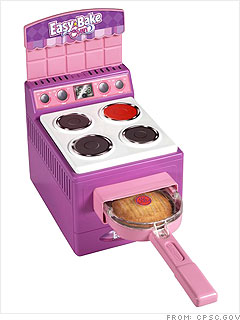
73. Easy-Bake Ovens
Hilton quickly files suit against all 278 kids
In February, Hasbro announces a recall of nearly one million Easy-Bake Ovens after 29 children get their fingers stuck inside, some suffering severe burns. Five months later the company is forced to reissue the recall after receiving reports on 249 additional incidents, 77 involving burns, including one that required a partial finger amputation. [not China's fault]
Easy-Bake Ovens
74. Google
Kidding. We kid. That's what friends do, right?
As thousands of eBay's biggest sellers gather in Boston for a convention sponsored by the auction site, Google invites them to a party promoting Google Checkout, a payment system that competes with eBay's PayPal. In response eBay, the single largest buyer of search ads on Google, "tests" a shift of its marketing dollars, pulling all its U.S. ads from the search engine for more than a week. Google cancels its party. [Greedy, greedy! Sounds like Microshaft tactics]
78. The Virginia Tourism Corp.
Virginia is for bangers
The Virginia Tourism Corp. scraps an ad campaign featuring people making heart symbols with their hands after it's noted that the gesture is also the gang sign of Chicago's Gangster Disciples.
The Virginia Tourism Corp.
82. One Laptop Per Child
On the bright side, they're learning a lot about anatomy
Nigerian schoolchildren receive $200 computers under the U.N. One Laptop Per Child program and quickly learn a few things nobody expected - such as how to find adult websites and how to store their favorite images on the computers' hard drives. Program leaders say future laptops will be fitted with filters.
83. CIBC analyst Meredith Whitney
Her husband, on the other hand, is more than a little freaked out by the downstream effects of the subprime crisis on the world's capital markets
After issuing a bearish note on Citigroup that contributes to a 7% drop in its stock, CIBC analyst Meredith Whitney receives death threats. Whitney says she isn't daunted. She is married to a former World Wrestling Entertainment champion called Death Mask.
85. Singapore Airlines
Fly the don't-get-too-friendly skies
Singapore Airlines inaugurates the Airbus A380, the world's largest jet, with a seven-hour flight from Singapore to Sydney. To the chagrin of those who forked out $15,000 for one of 12 private, double-bed-equipped suites, the airline asks its passengers to refrain from having sex. Says first-class passenger Tony Elwood: "So they'll sell you a double bed, and give you privacy and endless champagne, and then say you can't do what comes naturally?"
Singapore Airlines
86. Saudi Prince Alwaleed bin-Talal
Fly the I'll-join-the-mile-high-club-
if-I-damn-well-please skies
Saudi Prince Alwaleed bin-Talal buys his own Airbus A380, paying more than $320 million for a "flying palace."
87. SkyWest Airlines
Fly the smells-like-the-
back-row-of-a-Greyhound skies
SkyWest Airlines apologizes to passenger James Whipple after he is barred from using the plane's restroom during a one-hour flight from Boise to Salt Lake City. Whipple, who says he had two "really big beers" before takeoff, winds up urinating into his airsickness bag and is questioned by airport police upon landing.
93. British Airways Part 2
Fly the oh-gross-oh-gross-oh
gross-get-it-away-from-me
skies
On a British Airways flight from New Delhi to London, first-class passenger Paul Trinder wakes up from a nap to find the corpse of a woman who had died in the economy cabin being placed in the seat next to him. Upon complaining about the incident, Trinder - a gold-level frequent flier who logs 200,000 miles a year with the airline - says he is told he will not be compensated and should just "get over it."
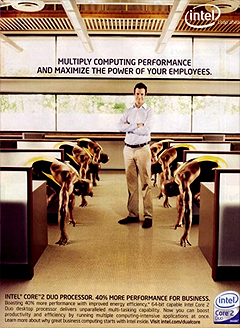
98. Intel
Just pop in your Birth of a Nation DVD, and you're off and running ...
To promote the speed of its Core 2 Duo Processor, Intel releases a print ad featuring six bare-shouldered black sprinters crouched in their starting positions beneath a white guy dressed for the office. "We made a bad mistake," says Don MacDonald, the company's director of global marketing. "I know why and how, but that doesn't make it better."
Intel
100. D.R. Horton
Apparently he missed the memo from Bev
"I don't want to be too sophisticated here, but '07 is going to suck, all 12 months of the calendar year." -- Donald Tomnitz, CEO of homebuilder D.R. Horton, on the outlook for real estate in 2007