Saturday, June 19, 2010

Economist compares Obama to Putin over BP

http://www.economist.com/node/16377269?story_id=16377269&source=features_box_main

I know The Economist philosophically supports the free market and neo-liberal capitalism, so I guess they wanted to come to poor BP's defense after the angry American mob grilled stonewalling Tony Hayward (Dickens would call him "Tiny Tony") in a public spectacle. How dare the descendants of colonist farmers show such disrespect to their mother empire! The Economist had the nerve to compare Obama to Putin over this matter. Obama's been called a lot of horrible things by a lot of stupid people since he hit the mainstream, but that's a new one. Obama is not harassing BP to "do his bidding" for his own lust for power and personal gain, as Putin does. He is prodding them to own up to their responsibilities, repair as much damage as can be repaired, and compensate all who have unjustly suffered for their mistakes. Because as we have seen from previous corporate disasters, companies will do all they can to delay and minimize payments (sometimes for decades). And are we surprised? That is what they exist to do - maximize production and profit, minimize loss.

Sure Obama is trying to score political points in the process and use the crisis to push his clean energy agenda (which may be offensive to some voters), but that isn't really hurting the country, unlike the previous administration giving energy companies the green light to regulate themselves. Yes his secretary Ken Salazar vowed to clean up the corrupt culture at DOI, and doesn't have much to show for it over 18 months, or at least not enough to have averted this disaster. So sure, BP is not 100% at fault. Westerners, and particularly Yanks, are addicted to abundant, cheap energy (we are now reminded of the true costs of "cheap energy"). Our leaders took industry money, gutted regulations, and got out of their way. But the bottom line is no one forced BP to tell Transocean to drill in an unsafe manner, low-ball the oil leak estimates, and half-ass the clean-up effort.

I understand that the Economist would want to remind us that BP's mistakes should not be an indictment of business as a whole. Have they been living under a rock for the past few years? Look how "big business" has performed in our lifetimes (and especially since Obama took office), and maybe they do deserve a blanket indictment. I'm not talking about the mom-and-pop restauranteurs, veterinarians, or freelance architects of the world that just want to make a living and provide great customer service. I'm talking about the big corporations who spend millions courting politicians, even to the point that the biggest oil money recipient in Congress, GOP Rep. Barton from TX, went so far as to open the BP hearings by apologizing to Hayward for his government's angry rhetoric and "shakedown". The companies that give their inept, short-sighted executives huge compensation, globalize their businesses to tap slave-wage labor markets and nonexistent regulatory environments, layoff thousands to appease Wall Street, and in many cases, commit fraud and break the law.

http://news.yahoo.com/s/ynews/20100617/ts_ynews/ynews_ts2660_2

Plus it seems that the bigger or more prominent the corporation, the worse their infractions. Toyota and GM are the biggest auto makers on the planet, and Toyota's quality control practices were hailed and replicated the world over. One problem, in their manic quest to rapidly overtake GM, they forgot their own teachings, and initially denied everything rather than fess up to their responsibility for putting some drivers in mortal peril. GM once ruled their industry, and millions depend on them for their livelihoods. But last year they were reduced to taking government handouts, even though tiny Hyundai posted record sales (so you can't just blame the recession). Fortune magazine gave Enron the title of "most innovative company" for 6 straight years (even Kobe Bryant couldn't win 6 straight titles), and we know how that turned out. Goldman Sachs is one of the best-performing and shrewdest firms on Wall Street, and now they are under investigation for multiple infractions. The world's biggest pharma, Pfizer, had to pay the biggest government fine in history (at the time), for improper drug marketing. Massey Energy, one of the biggest coal miners, permitted lax and negligent safety standards, which claimed the lives of dozens of its workers. And now BP, the world's 4th biggest oil company, has presided over the worst environmental disaster in the New World, stealing the dishonor from the world's biggest oil company, Exxon, after the Valdez spill. The list goes on and on.

One can argue that the sheer scale of these mega-companies makes it more likely that there will be some sort of problems under their umbrella, vs. smaller outfits at least. But their oversight/safety/compliance infrastructure should grow with the rest of the business. A 200 pound person can't survive with a child's kidneys. These businesses I mentioned may be too big to fail (apart from Enron), but maybe they're too big for their own good too. As Hayward said, he was "out of the loop" regarding the Deepwater Horizons drilling project. Many of the big banks caught in the subprime crisis claimed that they had no idea they were even dealing in those securities. When a company's leader has no idea what his or her company is doing, maybe that company needs to rethink the way it does business. I know one CEO can't micro-manage a billion-dollar organization, but the chain of command and communication should at least include the execs. Otherwise you just have a chaotic, out of control, short-term-profits-driven entity that is under tremendous pressure from shareholders, employees, and investors to cut corners and cheat to make more money.

In the Olliver Stone film "Nixon", the president confronts an anti-war protester. Both want the Vietnam War to end, but Nixon explains that it's not so simple because of the complex military establishment. The protester said it sounded like a beast that can't be controlled. I hope that is not what big business has become, but many warning signs point to it. I know that big corporate disasters and fraud are still relatively rare (the ones we find out about at least), and many companies follow the rules and behave ethically. But just because disasters like BP and Enron were possible in our free market society should be enough cause for alarm for us to rethink our entire economic system. I'm not saying a command economy would be any better (see North Korea), but when the status quo is failing, we have to contemplate alternatives. Unlike The Economist, I feel that it's better in this case to over-react to a potential problem rather than pretend none exists and the system is working fine.

-------

You've omitted the primary reason they make the comparison.  This should be a republic, a nation of laws and not men.  Instead of pursuing the law, Obama is calling BP into his office to strong-arm them into extra-legal requirements: for the good of the nation, or for his own political good, depending on your spin.  But good or bad, it's outside the law, and that's why the Economist comments that the "collapse in BP’s share price suggests that he has convinced the markets that he is an American version of Vladimir Putin, willing to harry firms into doing his bidding."

-------

No, the collapse in BP's share price is due to their spill and poor damage control thereafter, both of which Obama had nothing to do with. BP's stock price actually went up on June 16 when Obama met with BP execs to "strong-arm" them into agreeing to open the $20B escrow account (from $30 to almost $33). And the next day the share price held pretty steady at $32, so maybe investors were just happy that some sort of positive agreement was reached. So the data don't support the Economist's claim.

We are a nation that respects the rule of law, but we have no laws to date to handle an environmental disaster of this magnitude. If the $20B account is extra-legal, then BP doesn't have to agree to it. Deals are cut all the time in Washington, and sometimes what's good for the politician/party is also good for the country. Obama doesn't strike me as the shake-down kind of leader. BP would only agree to the $20B account if the alternative was worse (criminal action maybe?). Maybe Obama threatened to revoke BP's drilling leases on Federal land or confiscate assets. Both actions are completely LEGAL and acceptable for a president to do considering BP's horrible safety record in the last 10 years and their duplicity in their promises to improve (see the long ProPublica article below if you're curious).

I find it amusing how some people in the media/politics are getting so outraged about Obama "kicking around" BP (ostensibly for petty political gain, and not because it's the justified thing to do), yet they don't seem to exhibit a similar level of anger over the worst environmental disaster in American history that is affecting at least 5 states and millions of people/jobs for decades. And the critics seem to forget that Obama was pretty calm and rational during the first month of the spill, almost to a fault, and didn't take it to BP when he could have.

http://online.wsj.com/public/quotes/main.html?type=djn&symbol=BP
http://www.propublica.org/feature/years-of-internal-bp-probes-warned-that-neglect-could-lead-to-accidents
http://www.npr.org/templates/story/story.php?storyId=127561853

-------

Regarding the share-price question, I look at http://www.google.com/finance?q=NYSE%3ABP and see the stock closing at 31.40 on the 15th, 31.85 on the 16th, and 31.71 on the 17th, so effectively no change.  More interesting is that on the 16th, a CDS on BP's debt jumped 400 basis points, from 600 to over 1,000.  http://www.zerohedge.com/article/bp-cds-curve-goes-nuts-1-year-passes-1000-bps-no-offers-market  Basically, the cost of insuring against BP defaulting (bankruptcy) increased almost as much on June 16th as it did over the previous two months.  The market thought the chance of BP ceasing to exist was a lot higher on the 16th than on the 15th.

I agree that the spill is absolutely outrageous.  But the problem isn't just BP, and focusing just on BP isn't going to fix it or prevent it happening again.

Why weren't there laws in place?  This isn't the first time there's been a big spill in the US, nor the first time that BP's created problems - they had 760 pre-spill OSHA violations, something like 97% of oil-industry violations (http://www.businessinsider.com/bp-has-been-fined-by-osha-760-times-has-an-awful-track-record-for-safety-2010-6).  Why weren't they more closely regulated?  I'm sure you've seen that BP's Gulf Spill Response Plan was so unbelievably shoddy that it listed walruses as a local species (http://www.americanscientist.org/science/pub/bps-gulf-spill-response-plan-lists-walrus-as-local-species): what regulator signed off on that?

The ideal situation would have been that lawmakers in DC identified these problems and put laws into place to handle this situation.  That's a failure of leadership.  Big companies have been profit-driven since Adam Smith: why are we surprised by this?  Look at Standard Oil, or the big railroads of the past.  The job of government is to put the rules into place to set the proper incentives for those companies.  Instead, we have no laws to handle this situation.

The second-best situation would be to start putting those laws into place now.  Fix the regulatory scheme.  Reform tort law: why does the Oil Pollution Act limit the legal damages from an oil spill at a hilariously-low $75M (http://www.lawsuitfinanceblog.com/2010/06/bp_disaster_highlights_that_to.html)? 

Even better, turn this energy and fury into a change in American energy policy.  That would be real leadership: refocus popular anger from the short-term immediate cause to real long-term change.  The simple reality is that America's use of oil contributes to this.  The amount of oil spilled in the Gulf gets spilled *every year* in Nigeria (http://www.boingboing.net/2010/06/14/more-oil-spilled-in.html).  We only get upset when it's in our backyard.

Instead, we've got Obama publicly shaking down BP.  That's certainly easier: westerns work better when one guy has a white hat and the other has a black hat.  But it's not leadership, it's public theater.  And it ensures that this will happen again.

To be clear, I do think BP should go under as a result of this.  Given their current cash position, I don't think that's impossible.  They have a big line of credit from JPM right now ($50B) which could keep them afloat, but with CDS spreads widening and the various debt problems in Europe, I wouldn't be surprised to see JPM pull that.  They have something like 13B in cash and another 10B in yearly profit, but if the estimates of daily oil spill increases, or they don't fix it, their liabilities could be much higher.  Then we might get to see whether BP is too big to fail (it's like the too legit to quit of the 21st century!).

I'd just like to see the blame and fixes extend beyond just blowing up BP :)

-------

Thanks for the links and your comments!

I don't think this crisis is about putting BP in front of a firing squad like that inmate in Utah. I think it is about them owning up to their responsibilities for the damage they caused to the US and its people. We allow them to do business in our country with certain expectations, and when they fail to meet their obligations, some punishment is in order. BP and its execs have acted pretty callously and unapologetically for the first 1.5 months of the crisis, and now the best they can give us are alligator tears before going to a sailing regatta. The people and Washington don't appreciate that. Yes, maybe we're using BP to score political points and serve as a warning to other would-be violators, but as you said, destroying BP won't help us avoid another disaster, and won't bring the Gulf back. But let's remember that there's a good chance BP will be just fine in a decade, since much of their business is outside of the US, and they can write off all their fines and penalties. Everyone predicted the death of Exxon after Valdez.

FDR also made public spectacles and called out big industry and the banks whose business practices led to the Depression. From the NYT: Mr. Obama wanted to transcend partisanship. Instead, however, he finds himself very much in the position Franklin Roosevelt described in a famous 1936 speech, struggling with “the old enemies of peace — business and financial monopoly, speculation, reckless banking, class antagonism, sectionalism, war profiteering.” And that’s not necessarily a bad thing. Roosevelt turned corporate opposition into a badge of honor: “I welcome their hatred,” he declared.

As you said, during last week's BP-Obama meeting, the closing price was pretty much unchanged, so their stock didn't "collapse" in response to the $20B settlement that Vlad Obama forced upon them. But as I said, during the day of the 16th, the stock went up, not down. So if the meeting was so disastrous for business confidence, the share price didn't reflect that. Regarding the jump in basis points, that's how third-party bankers evaluate BP's prospects. Their debt status is near junk like Greece, but it may be irrational and inaccurate. It's just a guess, and has little to do with BP's actual financial viability and obligations to the US government. As we saw during the credit crisis, debt rating agencies were way off target and contributed to the collapse. BP and Greek debt are still much safer investments than a lot of stuff out there.

No one ever said the problem was all BP. In multiple emails I said it was also on the oil-thirsty public and our high-consuming way of life (not to mention our out-of-sight-out-of-mind political mentality), and also the lax regulators and politicians who took oil money and let the companies police themselves. But in this case, the spill is 100% the fault of BP and Transocean. Obama didn't blow up the rig. Problems with the cleanup and repair effort are on the industry and government both. But for the spill, I don't think BP can come out and blame the government for not regulating them better. Because that is an admission of their own incompetence (even though they assured everyone that they had deep water drilling down to a near-foolproof science), and contradicts the oil industry's efforts to ease regulations and expand drilling over the last decade. "It's not our fault, the government should have watched us more carefully!" Well they're not allowed to pull that excuse when they're the ones who told the government and public that everything was fine and to leave them alone.

As you probably know, pro-oil legislators wrote a loophole in the offshore drilling permits process. Regulators have only 2 weeks to review and sign off on drilling proposals before companies are allowed to start their projects. Everyone damn well knows that the MMS is understaffed, undertrained, underpaid, and the ones that do make decisions are often pro-oil former industry lackeys looking to buddy up to companies to earn a cushy return to the private sector. There is no way they can read thousand-page reports with complex data in 2 weeks. So essentially, it's like they don't even need to get an approval. This is the fault of industry lobbyists and corrupt public "servants". Energy extraction should be as scrutinized as financial accounting and food/drug safety (and we're still not perfect in those areas).

I completely agree with the need to have newer, better, stricter laws on the books. But we're just 2 months after the rig explosion. It's going to take Congress some time (universal health care took over a decade after all). We're still collecting the data, and the GOP are being assholes every step of the way, pulling the "government stifling business and taking away our rights" card every chance they can. But we can't have it both ways - either we want to roll out strong, effective, rational regulation of businesses in the national interest, or we just accept the status quo with the conservative ideology of deregulation and short-term profit-taking. If we have to temporarily trample on the rights of the "poor, defenseless corporation" when real flesh-and-blood people are getting screwed, then that's a sacrifice I'm willing to accept.

I don't think Obama will rest now that he has "shaken down" BP; that was never the end goal. Of course he used this occasion and his prime time address to stress the need for energy alternatives, and he will continue his push for a greener economy like he promised years ago on the campaign trail (of course the energy industry will fight him tooth and nail). He was under fire for not getting madder about the situation, so he responded. Maybe he went too far with the $20B, but the Dem Congressional leaders were also involved, and we'll let the historians decide in the future There were some concerns that BP would drag its feet to "honor all legitimate claims", so he cut through the red tape and made sure the victims got some help before the next ice age. He works for the people, not BP. The money is part of the process, but not the objective. Give Obama some credit, I think he knows that we have to change the way we do and regulate business so that we're less dependent on risky energy exploration and have more peace of mind that strict safety measures will avoid catastrophes. As you said about Nigeria, it is also sad that our dependence on imported oil conveniently allows us to ignore all the environmental and social harm energy extraction causes in the Third World. Well once we have more energy flexibility at home, we can be more selective with our sources of imports, and hopefully boycott the companies and nations that commit gross violations.

-------

I thought it was pretty clear, as per a speech given by Obama, that he WAS using this as a stepping stone to a new improved energy policy focusing on clean and sustainable energy, is that not the case?

And if i had to address point 1, why weren't laws in place?  I would say that it is because businesses own government on this kind of thing.  Kind of addresses the difficulty of point 2, make some now.  

I think t's point of washington deal making is what makes or breaks the Putin reference.  The understanding is that when Putin makes a deal behind closed doors, it was an offer you couldn't refuse.  I don't think we believe that is the case with Obama.  It may ACTUALLY be the case, which would make him Putinesque for sure, but i don't think that is public perception at this point.
--------
Thanks M, that was my point exactly regarding the difference with Obama and Putin. Plus BP has an army of litigators who are much better than government lawyers, so if Obama played hardball with them and overplayed his hand, they would find a way to roast him for it.

For all we know, the $20B fund may be a LUCKY BREAK for BP. As J said, they made over $10B in profit last year, and their cushy royalties agreements with the government mean that they shortchange the American people millions each year too. Maybe they won some government concessions and guarantees that they wouldn't revoke their licenses or whatnot. History has shown us that oil companies often escape full punishment, and I wouldn't be surprised if their allies in government helped them this time too. 
Thanks for your comments, G. I'm proud of Obama for doing this much so far and not being scared to be publicly anti-business (at least corrupt business). Actually my "approval rating" for him is the highest it's been since his inauguration. He didn't want this crisis; it's distracting the government and people from all his other policy initiatives. But he's doing what he can to fight for the victims and use the crisis to show us how we have fallen so far during the Bush years. We need more regulation (as if the recession wasn't proof enough), and cleaner ways of getting energy - plus we need to use energy more sparingly, which I wish he would stress more, instead of riding around in a big motorcade of Chevy Suburbans. And I hope he would use the BP crisis to show how horribly the GOP is behaving and how they are truly bad for America. As if health care wasn't bad enough, the GOP are just acting outrageously regarding BP and the financial reform bill. He's got to nail them to the cross for this, and even dare to call them unpatriotic (they called the Dems that during the War on Terror anyway).

------------

To add to this, I think no one (at least no one I've read) suggests that BP shouldn't be fully liable for all costs that result from the spill. As long as the escrow account is only used to pay all the legitimate damage claims that result from the spill (and, if it turns out to be less expensive than $20 bil, the rest is returned to BP), then the escrow account, on a net-net basis, doesn't really change BP's ultimate cash position.

What it mostly does is in the name of efficiency. First, it saves a lot of litigation and time costs on both sides. If BP doesn't set up the escrow account, then the government would have to sue (assuming BP initially refuses to pay), or keep sending individual bills to BP. Likewise for private parties. It is therefore in both parties interest to set up some means of expediting claims (if you assume BP actually is interested in a good-faith effort to pay legitimate claims and not on releasing packs of lawyers to try to get out of every damage payment).

I think ultimately the escrow fund is a pretty minor achievement by Obama (not that he's in a position to do much anyway). For it to be a Putin-esque style shakedown, it would require Obama forcing them to hand over private shares/monies to the government without compensation. Instead, he asked them to set aside some money on a contingency basis to meet all legitimate outstanding damage claims against them, to be refunded to them in the event that the fund is not exhausted. Any competent corporate bod/executive does this anyway for expected litigation costs, they just don't publicly make deals with the president to do it.

Basically, Obama gets some face for making BP do "something". BP does what it was going to do anyway (set up a contingency fund) and gets some positive press for "owning" the disaster. I think that's probably why the stock price was largely unaffected: the agreement doesn't really mean much one way or another for BP's ultimate fate. Maybe it spooked some bond investors by the size of the fund, but that has to be because BP is revealing to the market information about how much it thinks the damages may be, not because the government "shook them down".

---------

I think your reply is very well stated and sums up my feelings to a great extent.

One thing to note about the CDS market is that volumes are *way* down (like 90%) from the highs in 2007 so you do have a point about the pricing perhaps not being as aggressive as it could be (though I should mention that CDS prices are based on mathematical models and it might be a bit haphazard to characterize them as nothing more than a guess)...

PS:   I think you're right about blame for the disaster but I have a feeling of dismay to think that only now (2 months later?) the media is talking about how the redundant control mechanism was compromised (i.e. there was only one of two working safety mechanisms) and that no one seems to be asking why the safety systems aren't passive control mechanisms (like the kind in a nuclear reactor) rather than active control mechanisms.

PPS:  I think the administration can't be blamed for the clean-up; once a disaster has occurred there isn't much that can be done (especially when the technical challenge is the thing requiring management).  The government can definitely change the shape of the incentives which are in place and the regulations which give rise to the systems which are utilized in practice... but come on - Bush was the oil man, not Obama!

Thursday, June 17, 2010

Alter's "The Promise" on Obama's first year

If you don't want to shell out bucks for Alter's new book on Obama's first year in office, here's an interview where he summarizes his reporting:

http://www.kqed.org/epArchive/R201006161000

I've been harsh on Obama because he entered office with impossibly high expectations and hype (some of it his doing). But Alter reminds us of how hard it was to be president in 2009, and how Obama kept the ship afloat and made some progress on big issues despite massive GOP hatred and obstructionism.

It's admirable how Obama is the type of politician who doesn't care as much about getting credit and gratitude. The stimulus package and TARP were big examples, where the GOP/media gave him hell, and the public never really embraced the positives. The stimulus, despite being infused with some pork and waste (inevitable if Congress is involved) was designed for speed - get passed and get the money out quickly. Sure the economy is experiencing stimulus-withdrawal now, but we avoided a prolonged depression (economists debate how much the stimulus funding actually affected our massive economic machine). It was a real help for medical research, desperately needed infrastructure spending, and assistance for the poor (an increase in the IRS earned income credit and extended unemployment insurance). TARP was started by Bush and Paulson anyway, the big banks survived, people didn't lose their deposits, and Wall Street mostly paid back TARP loans (+ interest), so it didn't really hurt America except for giving arrogant bankers the confidence that the taxpayer will be behind them next time. Both bills cost Obama political capital, and it's hard to get credit and persuade the public that his decisions averted worse outcomes. We'll see how he fares with financial regulation overhaul, despite it being pretty watered down already.

He ignores the political theater and polls almost to a fault, but at least he's trying to do the right thing knowing full well that it's going to cost his re-election chances. Everyone told him to hold off on heath care, but he felt that America needed it in 2009, and there would never be a better time when it could get passed. That hurt him too, but he doesn't need a few insignificant political victories to soothe his ego. He'd rather put his pen to paper so that millions of more Americans can get coverage.

From what we knew of candidate Obama, the M.O. was that he was a gifted communicator but weak on executive experience. At least from Alter's view, it's strange that Obama's first year was marred by poor communication but kept afloat by seasoned, savvy leadership. He is deliberate, analytical, defers to the experts, and his slower pace of decision making (vs. Bush at least) is seen as either a strength or weakness. But his stubborn aversion to sound bites shows respect for his audience, but is also hurting his ability to get messages across. America needs to hear his vision in one sentence and as few syllables as possible. If he wants to gain support, he's got to find a way to boil down Afghanistan, health care, and energy to a bumper sticker. Because his opponents definitely have plenty of anti-Obama bites that stick in the public memory.

One area where his leadership and office were challenged was Afghanistan. Apparently the Pentagon establishment (and Hillary) really ambushed Obama on the troop increase issue, and painted him into a corner. Biden was so upset how they treated the president that he was looking to get people fired. But that also shows weak resolve if a chief executive is pressured into doing what the mob wants. But he believes that Afghanistan is critical for US security, and will withdraw troops next year if conditions show improvement.

Monday, June 14, 2010

Massive mineral deposits found in Afghanistan

Oh, so that's why the war is "worth fighting for": http://www.nytimes.com/2010/06/14/world/asia/14minerals.html?no_interstitial

Afghanistan is flush with iron, copper, gold, and rare expensive metals used in electronics. Soviet geologists first discovered some of the deposits during their failed occupation. Some Afghans retained their survey maps, which caught the attention of a USGS development team after our invasion. We conducted our own aerial surveys in 2006-7 which confirmed the mineral riches, but didn't act on the data until a Pentagon business development unit (that formerly worked in Iraq) got hold of it in 2009.

There are quite a few challenges, mind you, before Afghanistan becomes the "Saudi Arabia" of metals though. Some of the richest deposits are found in the hostile border regions near Pakistan, where even the NATO forces won't venture into. The deposits require heavy equipment and well trained workers to extract, and may be situated in tough mountainous terrain. Currently Afghanistan lacks even a km of railroad, and has no mining infrastructure (or really any modern infrastructure), so it would take decades of development and billions of foreign investment before they are ready. Yet as we have seen in Nigeria and other unstable oil nations, static industrial targets are easy pickings for insurgents and thieves. If they can attack NATO and UN compounds at will, they can easily disrupt mining production with sabotage or mere threats to workers. We know that we won't really pacify Afghanistan no matter how many surges we send. So if the price is right to justify mining there despite the risks, our security presence will probably need to be permanent, like our bases in the Gulf states. 

Another confounding factor is minerals-thirsty China. Although Afghanistan is "our project", the Chinese have already made their presence known by bribing and winning the rights to mine copper in some areas. So it's almost assured that the US and China will raise tensions competing for influence. And lastly, the culture of corruption in Afghanistan would probably just intensify with a new high-value economic sector. The US is among the top 20 least corrupt nations, and look how our MMS and mine safety regulators perform.

"The corruption that is already rampant in the Karzai government could also be amplified by the new [mineral] wealth, particularly if a handful of well-connected oligarchs, some with personal ties to the president, gain control of the resources. Just last year, Afghanistan’s minister of mines was accused by American officials of accepting a $30 million bribe to award China the rights to develop its copper mine. The minister has since been replaced." -NYT

Also a very good Frontline doc summarizing our challenges in Afghanistan: http://www.pbs.org/wgbh/pages/frontline/obamaswar/

We're paying and pressuring the Pakistani government to help us defeat the Afghan Taliban, which is essentially the Afghan wing of the ISI. Yet an even greater regional security concern is the viability of the fragile pro-US regime in Islamabad, with its nuclear arsenal, rivalry with India, and threats from internal Islamist groups. So winning in Afghanistan means weakening our allies in Pakistan, and supporting Pakistan means condoning the Afghan Taliban. How are we supposed to resolve that paradox?

Thursday, June 10, 2010

Please don't let Meg Whitman win

I really, really don't want Meg Whitman to be our next governor (call it anti-CEOism bigotry). How can she blast the "tax and spend" CA liberals in Sacramento, and promise austerity and fiscal discipline, when she's broken campaign spending records in her epic battle to overcome the mighty... Steve... Poizner? She's spent $81M so far, and will at least double that in her fight vs. Jerry Brown. Most of that has been on incessant TV ads, which surveys have shown actually turn off CA voters to her. So she's spent $71M of her private fortune to produce ads which actually hurt her, yet she vows to lay off 40,000 state workers as governor, in order to "trim the fat". The average full time CA state employee made $68k in 2008. So if Whitman cares so much about CA, why doesn't she stop her stupid Spamming and extend 1,000 jobs for a year? Better use of the money to me. Republicans hate government, yet they want to lead it. Well, they use the office not to help the people, but to hook their buddies up. Dems do this too, but less outrageously. Well, at least Whitman isn't a Bible-thumping ideologue, and I doubt she'd get caught in a sex scandal because she makes Hillary Clinton look like a perfect 10. 

During this anti-incumbent/anti-government movement, she does play the outsider with business savvy pretty well. But so did Arnold and Dubya.

http://www.huffingtonpost.com/2010/06/04/meg-whitman-spending-meg-_n_601328.html

Wednesday, June 9, 2010

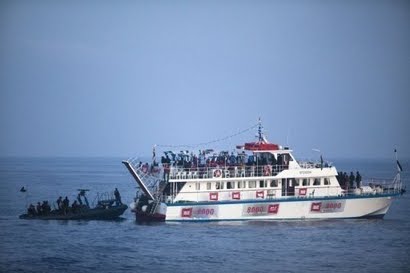
Israel after the bloody flotilla raid

"[If I had been born a Palestinian, I would have joined] one of those terrorist organizations."
- Former Israeli general and prime minister Ehud Barak, 1986

http://www.newsweek.com/2010/06/05/lost-tribe.html

This is one of the most candid, reasoned assessments of Israel's security paradox from a former Israeli major who is now at the Kennedy School. And he doesn't blame anything on the Palestinians, even when justifiable arguments exist. He maturely realizes that Israel is ultimately in control of, and responsible for, its actions and destiny, and any attempt to blame others for "forcing their hand" into bloody mistakes is an insult to their homeland, people, and values. As previous emails have touched on, there is no logic in using violence to defend oneself, when those acts of violence ultimately compromise future security (and one's social/moral values). If you are truly committed to ridding the world of terrorists, WMDs, and murderous fanatics, you cannot use that cause as pretext for becoming the very thing you're fighting against.

We recently discussed how the Israeli public as a whole has soured on the peace process, and would rather maintain the status quo of apartheid. During the first Lebanon war in 1982, Israeli-backed Christian militias slaughtered hundreds of Palestinian refugees. A crowd the size of 10% of Israeli's population gathered in Tel Aviv to protest Israel's indirect responsibility for the atrocity. A generation later during the 2008-9 Gaza war, only a few dozen Israelis protested similar killings of Palestinian civilians - this time directly by Israeli hands (and not accidental in some cases). Possibly in the 1980's, criticism of Israel's government/military was not automatically equated with anti-Semitism and betrayal of heritage, as it may be today thanks to provocateurs like Alan Dershowitz. Despite much past suffering, those Israelis who took to the streets in 1982 understood that true patriotism is not blind support, but rather diligent scrutiny to ensure that their country met the social and moral obligations of a righteous nation. But current Israelis mostly criticized the Lebanon/Gaza wars and the recent bloody aid flotilla raid because they were not resounding victories like the Six Day War. They were upset that their government wet the bed, not that they killed innocents in unnecessary conflicts.

The number of Palestinians killed over five years of the first Intifada equals the number killed in the Gaza war in just 22 days. The intensity of violence is increasing, yet the number of internal Israeli investigations of Palestinian civilian deaths has decreased. The Israeli public generally accepts this because their quality of life has improved, yet more Palestinians are starving and dying. Israeli deaths are way down after the erection of the security walls and Hamas/Hizbullah's ceasefire of rocket attacks. And all the while, their government has become more right wing, and provocative settlement and enforcement activity in the West Bank show no signs of abating. I suppose the government and public believe that such measures are necessary to counter the growing threats of terror groups and a near-nuclear Iran, but international condemnation of their draconian methods makes it harder to build consensus for punitive action on Iran and supporters of anti-Israel terrorism. Though all that has nothing to do with millions of unarmed Palestinians living in squalor and oppression. I'm not saying it's an easy fix, but why can't they make a better effort to decouple the humanitarian consequences from their security strategy?

Israel was created after WWII as a homeland and safe haven for Jews. Yet since then, more Jews have died in Israel than the rest of the world combined. Sadly, more Jews would be alive and thriving today had Israel never been created. So has Zionism been a failure? I am sure that Israelis would counter that finally having a homeland was worth the sacrifice, and look at all they have accomplished (with massive Western aid and diplomatic support). But is ethnocentric pride clouding rational judgment? A successful Jew would still be free to succeed in most other corners of the industrialized world. Though a Jew is less safe in his homeland than in nations that were formerly affiliated with Nazi Germany, or even in the Islamic Republic of Iran. Jews aren't dying in the Holy Land because their neighbors wish to exterminate them for who they are. They're dying because they refuse to give up or even fairly share land that others want, or used to legally reside in. So really it makes no sense for politicians and the media to conflate anti-Semitism with territorial power and politics.

This should be obvious but I'll state it anyway: I think Jews should have a safe, independent homeland that reflects some of their ancestral territory. I also wish the same for every other landless minority group, but not at the price of endless conflict, regional instability, and displacing others (especially those who never even remotely contributed to the suffering of that minority group). Israel is here to stay, that is the reality. But military strength and propaganda are not enough to guarantee its future. Success and survival depend on sharing and cooperating with neighbors, not subjugating and murdering them. South Africa, Nicaragua, Northern Ireland, and maybe even Sudan have all shown signs of progress towards peace and reconciliation from ostensibly intractable, complex, and delicate situations. It's their choice.

Now if only Helen Thomas could have articulated something like that instead of, "They should go back where they came from".

Friday, June 4, 2010

Oscar Grant murder trial: setting up for another Rodney King?

http://www.kqed.org/epArchive/R201006040900
http://www.youtube.com/watch?v=bmJukcFzEX4
http://cbs5.com/local/BART.shooting.trial.2.1681755.html

You probably remember the shooting of Oscar Grant on New Year's Eve by BART policeman Johannes Mehserle that was caught on a number of cell phone cameras. The cop is accused of murder, but the trial was moved from Alameda to LA County due to possible protests, a biased jury pool, and possible harm/tampering of the courtroom participants. Mehserle is defended by Attorney Michael Rains, who has defended the police often in his career, and has also represented Barry Bonds.

The jury selection process has begun, with about 250 LA residents (about 1/4 of them being black) filling out a paper questionnaire to tease out prejudice regarding race, crime, and law enforcement. Although both sides have agreed on the list of questions, there may not be much live questioning. The judge plans to select the jury in a matter of two days or so and then jump into opening statements, when jury selection for similar high-profile murder cases has taken weeks. The assigned judge, Superior Court Judge Robert Perry, has a reputation for expediency and keeping to a tight schedule. So that is raising some eyebrows. But each side is permitted to excuse one judge-selected juror for any reason other than possible bias.

In addition, the matter of admissible evidence is puzzling. The California evidence code states that "character evidence" is inadmissible for a trial of this nature. Some of you on this email list have JDs, so please chime in with more explanations and corrections if I misrepresent anything. Basically, the victim's past conduct during similar events as the night in question can't be used to explain his behavior/intent. Grant has had 3 felony convictions, and had resisted arrest during a prior altercation when he was being similarly cuffed on the ground, and was then tased. The judge felt that it would be a denial of Mehserle's Constitutional rights to bar this evidence that may cast doubt on his guilt, so he decided to supersede CA law, which is unusual.

On the other hand, Mehserle's questionable background will most likely be inadmissible. Apparently he has used a taser properly on duty before, which would cast some doubt on the accidental firearm discharge defense. Mehserle is also under investigation for physical contact with a black suspect, but since that litigation is pending, it is also inadmissible. It's also strange that if Mehserle was innocent, why would he refuse to participate in the BART police internal investigation and resign a week after the incident? Mehserle was mostly silent after the event, and during his first questioning by internal affairs, he never mentioned any taser. His "I thought I was using my taser" defense only emerged two days after the event, possibly after being coached by attorneys. And there are points such as a taser weighs about half as much as a loaded sidearm, and also has bright yellow markings on it that pistols lack. Plus there are the bystander cell phone videos, which seem to show Mehserle looking at his holster before reaching for his gun, suggesting cognizant use of deadly force.

Regarding the cell phone video footage, the judge's ruling is troubling. In general, jurors can evaluate impartial video evidence themselves and decide the facts based on their perceptions. But for the Mehserle trial, the judge granted the defense's request to have a video analysis expert testify on the video. They argue that the poor quality of the footage requires a video expert to "decipher" the events in question. So in this case, the expert opinion will be telling the jury what he thinks is going on in the video. Will the jury trust their own instincts, or defer to the views of an expert called by the defense?

So if Mehserle is acquitted or charged with a lesser manslaughter conviction, there will be probably be a lot of anger and some violence from the black and minority communities in the Bay Area (though the trial seems to be of very little interest to LA residents). Of course the trial hasn't even begun yet, and who knows what Mehserle will say on the stand, but already a couple judge rulings seem to be favoring the defendant.

Friday, May 28, 2010

Krugman's article on Obama and the spill

The Gulf is one of the most productive fishing areas on the planet. Now the industry is screwed for years. Much of Gulf fishing is done by small, immigrant operations that don't have the scale to weather this disaster. If I were them, I would take truckloads of rotting seafood and dump them at BP USA's headquarters. Let's see how they like another industry shitting on their livelihood.

G was kind enough to send me a piece from Krugman about Obama and GOP criticism over his handling of the spill: http://www.nytimes.com/2010/05/10/opinion/10krugman.html.

Did you see the press conference today? I agree with Krugman that Obama has done about all he reasonably can for the spill. The government doesn't have the know-how or equipment to fix drilling disasters. I guess he could threaten BP and make them hurry up, but based on their track record, do you want to rush a reckless, accident-prone company into another mistake? Obama could have mustered up more anti-spill resources and pulled rank on BP for the cleanup though. Recruit the fishing boats, get all the booms and vacuums you can requisition. Overwhelming force to silence the critics and put people at ease, even if it's not fixing the problem 100%. Apparently 7 nations have offered us help, but we only accepted it from 2: Mexico and Norway (a nation with vast offshore drilling experience in worse waters, yet with a better safety record). But he still did much better than Bush during Katrina.

As Krugman and Obama have said, I don't know why there is such a blanket anti-government sentiment among conservatives. Reagan said government is the problem, but government is the solution (and the unique solution) for many things too. Do they really not care that America lost trillions in wealth due to de-regulation, that hundreds of people are dead due to gutted, corrupt federal inspection agencies, and that we are stuck in 2 un-winnable wars because the separation of powers failed? Bad, dysfunctional government is a problem, so why not fix it instead of weaken it more? They are sending our concept of government to a "death panel". Just because of the Toyota pedal problem, do critics say that all cars are bad and we should do away with them? You can't judge something based on its worst performance (also a critique of our penal system). And you especially can't judge when you set up something to fail beforehand for your own selfish purposes. If they don't want government, then what is their alternative? Every man for himself? We'd just be a nation of paranoid, selfish assholes stealing from and lying to each other. Is that their American dream? Is that conservatism? Freedom must go hand-in-hand with personal responsibility, as any GOP would say. But clearly personal responsibility is fallible, so who is there to enforce it but the government and rule of law?

More on the MMS:

http://www.npr.org/templates/story/story.php?storyId=127126854

In one case, it was reported that a MMS inspector gave his inspection form to a rep of the company being audited. He filled out the questions in pencil, and the MMS guy just wrote over in pen. Another was being recruited to a company at the very moment that he/she was auditing the company. Needless to say the company passed and he/she got a new job.

Wednesday, May 26, 2010

Consequences of our "great success" Iraq Surge

http://www.pbs.org/wgbh/pages/frontline/woundedplatoon/view/?utm_campaign=homepage&utm_medium=proglist&utm_source=proglist

Politicians and the Pentagon love to tout the Surge as positive validation of our counter-insurgency and Middle East strategies. But this documentary describes the human costs on a particular platoon of soldiers from Fort Carson, CO, which had one of the highest kill and casualty rates in the Army. Due to the Army's desperate need for more boots on the ground, they relaxed their admission standards and granted waivers to young men with criminal records. While those men mostly served gallantly and performed similarly to non-criminal peers, they also had a higher incidence of misconduct. After their first tour (pre-Surge), the platoon returned to Fort Carson and some engaged in substance abuse, criminality, and poor performance. 15 of 42 soldiers in the platoon left the Army for various reasons, which reduced the unit's combat readiness and seniority. Their commanders asked if anyone wanted to talk about problems, and "offered" mental health services, but it was mostly lip-service and troops were scared to come forward, possibly risking harsh judgment or punishment (http://www.npr.org/templates/story/story.php?storyId=10374760). The fort was terribly under-staffed and under-trained for PTSD treatment anyway, and even needed to outsource to local doctors in town.

Despite these problems at Fort Carson and elsewhere, Washington needed more troops for the Surge in 2007, so many unfit soldiers were called up again to deploy after just one year home (the military recommends two years). Despite pending criminal investigations and evidence of PTSD/substance abuse against some, the Army broke its own rules and allowed these troubled men to return to combat. These already mentally and physically wounded men were now asked to live in forward areas outside base protections, and street fight with more intensity and at a higher frequency. Their tours were extended from 12 to 15 months midway. Morale was down and casualties were up, as well as unconfirmed reports of indiscriminate killings of non-hostile Iraqis. Complaints of PTSD rose, as did demand for battlefield mental health services. But since many of the needy soldiers now lived beyond the wire, they were inaccessible to psychiatrists, and those who got treatment were often declared "fit for duty" despite obvious warning signs. Instead, the Army prescribed a huge amount of pharmaceuticals such as anti-depressants and sleep aids like Ambien, to 20,000 soldiers in total (prior to the Iraq War, combat soldiers did not take psychological drugs due to supply logistics and inability to monitor treatment). Yet the warning labels for those drugs state, "Do not perform hazardous activities while medicated. May cause side effects such as depression, aggression, insomnia, reduced inhibitions. Take only under the close supervision of a doctor." Withdrawal from those drugs can also be severe, and due to combat constraints, soldiers would exhaust their prescriptions on the field and wonder "now what?". Soldiers also got their hands on black market Valium, pot, and other drugs.

Since the Iraq War began, 17 soldiers from Fort Carson have been charged or convicted of murder/attempted murder/manslaughter, many of whom had prior criminal records, symptoms of PTSD and TBI (traumatic brain injury), and were taking prescription or illegal drugs. 36 others have committed suicide. Fort Carson had 14,000 soldiers, so their suicide rate is 40% higher than the overall US male population (according to WHO). When asked about these matters, retired Fort Carson officer Colonel David Clark, head of the 506th Infantry (that this platoon is a part of), said, "The Surge worked. War is a dangerous thing. [There will be] psychological problems for soldiers; is that reason not to do it? You gotta do what you have to do."

Easy for him to say from behind a desk.

Wednesday, May 19, 2010

Mexican drug war

There was an interesting series on NPR about the war among drug gangs and government forces in Mexico. The most powerful cartel in the country is Sinaloa (named after their home state). Their boss "Chapo" Guzman is the most wanted drug trafficker in the world, with a $5M bounty on his head. Recently the Sinaloans have tried to bully their way into Juarez, since it is such a valuable smuggling conduit into the US. The smaller local Juarez cartel (La Linea) is fighting back of course, and the city has become the murder capitol of the world, with 6 killings per day. This prompted the US to contribute another $1.3B in anti-narco aid to Mexico, and President Calderon sent in 10,000 army troops to the city. Violence went down for a couple months, but then actually got worse than pre-army levels. Now the city looks like a Mad Max movie.

A possible explanation is that the army is taking a side. Whether due to political strategy or corruption, the Mexican military seems to be favoring the Sinaloa newcomers in Juarez. The majority of recent arrests have been La Linea members. Former police and army officers told NPR in secret that they are sure there is collaboration. Juarez cartel members recently assassinated 6 federal cops and left this tag on a nearby wall: This is what happens to officers "who ally with Chapo and all those mother- - - - - - - who support him. Signed — La Linea."

Of course this is nothing new, as law enforcement has made its services available to criminal organizations for centuries. For the right price, they stay out of their way and even make life difficult for rival gangs. But for the cops/federales to blantantly take a side is unusual. Aren't all drug pushers the enemy? US authorities shot a video of a Mexican army Humvee towing a stuck Sinaloan SUV (carrying a major pot shipment) out of the Rio Grande (unfortunately I can't find it on the web). Beats the heck out of AAA. The Mexican government dismissed the incident as Sinaloans masquerading as army, which is possible, but they could just be covering their asses.

On the other hand, the majority of overall recent anti-narco arrests has been against the Gulf-Zeta cartels in the east (FYI, the especially violent Zetas were founded by anti-drug commandos who defected for higher pay to become guns for hire, and eventually made their own drug business), who happen to be the next most powerful rivals to the Sinaloans in the west of the country. But is this bias actually a good thing? We know that drug demand in the US isn't going away any time soon, and probably never. We know that law enforcement can't really stop the production and trafficking of those drugs from Latin America northward. Most of the drug violence is due to rival gangs fighting over territory and power. If the Mexican government favors the strongest dog in the fight (and the Sinaloans happen to be relatively more professional, well liked by many Mexicans in Sinaloa, and less randomly brutal than their rivals), this may help the Sinaloans wipe out the other cartels and monopolize the Mexican drug trade. Then there would be no more drug war. The Sinaloans would then make some sort of truce with the Mexican government, and order would be restored. Sure there would still be some bloodshed, internal conflicts, and new gangs emerging that the Sinaloans would need to confront, but conditions would probably be better than what we have now.

Of course the US wouldn't like this because the same (or similar) amount of drugs, dirty money, and guns would still be crossing our mutual border, no matter how many gangs are out there. But for the Mexicans, they don't care as much. Their priorities are stopping the violence and restoring order in their country. And frankly, that's probably worth cutting a deal with the devil. The US wants the drug trade to stop in Mexico, which will never happen on our present course, and much of it is our fault. So if drugs are still moving, might as well stop the gang war and slaughter over it, so it makes sense to let the Sinaloans "win".

http://www.npr.org/templates/story/story.php?storyId=126890838&ps=rs

Monday, May 17, 2010

What caused the Deepwater Horizons to sink?

Earlier AP investigations have shown that the doomed rig was allowed to operate without safety documentation required by MMS regulations for the exact disaster scenario that occurred; that the cutoff valve which failed has repeatedly broken down at other wells in the years since regulators weakened testing requirements; and that regulation is so lax that some key safety aspects on rigs are decided almost entirely by the companies doing the work.

http://news.yahoo.com/s/ap/us_gulf_oil_spill_inspections

L also informed me of a great "60 Minutes" interview with a Transocean (world's biggest offshore drilling company) Deepwater Horizons worker who was there during the explosion. That rig did the drilling, and another would handle the oil collection. Apparently the DH did already successfully drill the world's deepest well that I mentioned last week (4k feet water + 35k feet rock), and the current well was a "mere" 5k water + 13k rock. Much of the accident is due to BP's reckless, rushed, greedy timeline. In their haste to tap the huge Tiber reserve (since drilling cost BP $1M/day), they drilled too fast and destroyed their first well. That set them back 2 weeks (delaying the job from 21 to 42 days), showing that haste makes waste.

Regarding the blowout preventer (BOP), they ran a test 4 weeks before the accident. There is a giant rubber seal called the annular that closes around the drill pipe and essentially shuts off the well like the washer in your faucet. But during the test, a worker accidentally moved the drill pipe. So it rubbed on the annular while it was fully engaged (like driving with your parking brake engaged), which probably damaged it. Workers on the surface found chunks of rubber coming out of the well later. A damaged annular may skew pressure tests/measurements (and those tests are the main data for drillers to determine whether it's safe or not to let oil in the well), but the manager said it was "no big deal". Also there are 2 electrical control pods that connect the BOP to the surface (1 primary, 1 backup). They lost communication with 1 of them. A later investigation showed that the BOP was also leaking lubricant and had weak battery charge. But rig tests showed full functionality, so they went ahead as planned.

BP and Transocean managers were fighting over how fast to finish the job too. Drillers use a heavy metal-doped fluid nicknamed "mud" to fill the well and keep the pressurized oil from shooting up. But it needs to be removed before the oil can start to be pumped. Halliburton was paid to install a set of concrete plugs along the well to reduce the pressure without mud. One of the plugs wasn't finished yet, but BP ordered Transocean to remove the mud and get rolling. If the mud and third plug were in the well, it's quite possible that the blowout wouldn't have happened. Each of these mistakes may not have been critical, but the sum of the errors led to the catastrophe. Though the terrible part is that it was all human error and human decisions, not really technical failures. But no matter how infallible our tech gets in the future, how can you divorce human frailties from the offshore drilling equation? Laws can't be written to safeguard against every possible circumstance and bad judgment.

Despite all these concerns, they "stayed the course". Just as a crew was flown in to celebrate the rig's record of 7 years without accident, the explosion occurred. Flammable gases from the well probably leaked through the damaged annular and reached the rig, where it was sucked up by the rig's diesel electricity generators and blew them up. 11 people were incinerated and the rig sank soon after.

http://www.cbsnews.com/video/watch/?id=6490348n&tag=contentMain;contentAux
http://www.cbsnews.com/video/watch/?id=6490378n&tag=contentBody;housing

The war on drugs has been a "failure", or has it?

"President Obama's newly released drug war budget is essentially the same as Bush's, with roughly twice as much money going to the criminal justice system as to treatment and prevention," said Bill Piper, director of national affairs for the nonprofit Drug Policy Alliance. "This despite Obama's statements on the campaign trail that drug use should be treated as a health issue, not a criminal justice issue."
Obama is requesting a record $15.5 billion for the drug war for 2011, about two thirds of it for law enforcement at the front lines of the battle: police, military and border patrol agents struggling to seize drugs and arrest traffickers and users. About $5.6 billion would be spent on prevention and treatment.
- Martha Mendoza, AP

http://news.yahoo.com/s/ap/20100513/ap_on_re_us/failed_drug_war

Some high (or low) lights from our 40-year "war on drugs":

- Nixon proposed the war on drugs to "protect our young people" from the hippies, degenerates, and homeless Vietnam vet addicts (who only took drugs to cope with the horrible war that he escalated). When adjusted for inflation, the current war on drugs budget is 31X larger than Nixon's.

- We've spent $20B to export the war to other nations ($6B to Colombia alone). In many ways, Colombia and Mexico (and definitely Afghanistan) are less safe today than 1970. Speaking of Afghanistan, politicians often say that we have to stop the Taliban because they're responsible for exporting the bulk of global heroin to the West. Well a recent UN/CIA study showed that the Taliban account for about 3% of total heroin trade in that country, while the president's brother's cartel (Walid "Escobar" Karzai) accounts for much more (http://www.kqed.org/epArchive/R201005131030).  

- $33M on "Just Say No" and other youth marketing, but drug use among HS students has been relatively unchanged since the 1970s. Though the CDC reports that overdoses have risen since, peaking at 20,000 last year.

From the AP: $121 billion to arrest more than 37 million nonviolent drug offenders (or $3.3k per arrest - imagine how many books and meals that could buy), about 10 million of them for possession of marijuana. Studies show that jail time tends to increase drug abuse. $450 billion to lock those people up in federal prisons alone. Last year, half of all federal prisoners in the U.S. were serving sentences for drug offenses.

- The Justice Dept states "an overburdened justice system, a strained health care system, lost productivity, and environmental destruction" is costing the US $215B PER YEAR.

- At $320B per year worldwide (about the GDP of Argentina), the drug trade accounts for 1% of all human commerce, and that doesn't include drug enforcement and drug rehab.

------------

But hey, the Navy Seals got to brag that they whacked Pablo Escobar (at one time on Forbes' 10 richest list) with a killer sniper shot to the head, and Hollywood made millions off "Scarface", "Clear and Present Danger", "Blow", "American Gangster", "The Wire", "Miami Vice" (Michael Mann version), etc.

But on the other hand, the "prison-industrial complex" has risen to become a serious economic and political player in our country (especially in CA). We've locked away thousands of poor colored people, and under the justification of drug enforcement, authorities have illegally seized millions of dollars worth of honest property for their own benefit (http://www.npr.org/templates/story/story.php?storyId=91490480, http://www.npr.org/templates/story/story.php?storyId=126386819). We've sold billions of dollars of military and intelligence hardware to US communities and (oppressive, corrupt) foreign governments. Thousands of Mexicans, Colombians, Afghans, and Americans have died. So if you're a warden, drug kingpin, member of law enforcement, arms manufacturer, conservative politician, or racist/xenophobe, then the war on drugs has been a smashing success for your careers and values. The pro-war camp says that the world would be worse off if the war on drugs was never declared, and drug abuse/criminality were permitted to run rampant. That is debatable, but clearly the resources haven't been used in the most intelligent, effective manner.

Thursday, May 13, 2010

More on the BP Gulf spill

http://www.newsweek.com/id/237651
http://www.newsweek.com/id/237619

Some interesting articles regarding the aftermath of the BP disaster. Incidents like the Gulf oil leak and the West Virginia mine deaths remind us of the question: how many lives and how much environmental damage are we willing to offer up on the altar of commerce and cheap energy? If we had a renewable energy economy, all of that harm could be avoided, unless a solar panel came loose in the Mojave and crushed a mouse. Unfortunately or not, very few Americans are directly affected by these industrial disasters, like the Middle East wars. So therefore it is a lot easier for the rest of us to ignore problems or even live in denial as long as the gasoline and electricity keep flowing. But although we don't see it, Alaskan fishing communities are still devastated two decades after the Valdez spill. Local ecosystems will probably never recover to pre-spill vitality, and fishing economies were decimated (suicides and domestic violence have risen significantly in those hard-hit communities too). Yet those victims have been swept under the rug, since oil is so vital to Alaska's economic survival (and provides hefty payouts and kickbacks to many in power), so Palin et al. up there are as pro-drilling as ever. Sacrifices for the "greater good", I suppose. I hope this sad narrative won't repeat in the Gulf, which is still struggling after Katrina, but I don't think their future is bright (in some cases, it has taken an entire year to finally plug a blown out well).

The recent NYC terror scare reminded us to be vigilant, and the government/law enforcement often state that we can't afford to be wrong even once - zero tolerance for terrorism. If only we could hold companies to the same standard regarding environmental harm (and we're not even talking about climate change yet, though the Kerry-Lieberman bill is sparking new discussion on the sausage making of energy reform: http://www.kqed.org/epArchive/R201005130900). We're petrified of Abdul the crazy Muslim bomber, even though the chances of being a victim of terrorism are at lottery levels. 9/11 was a major human and economic disaster (though smaller than the subprime bust), but after 9/11 the US has suffered much more from environmental disasters than terrorism (domestically at least). So what should we really fear? As a society, we've almost tuned out eco-disasters. Yes the Gulf spill is huge in magnitude and may well spur a (watered down) overhaul of drilling and environmental regulations. But there were at least 5 major North American energy disasters since 2000, and I doubt many of us could name them. It's one of those "oh well, what a shame" tragedies, like the problems in Africa - we're sympathetic when asked but otherwise it's barely on our radar. I hope we don't become like the Iraqis, where a daily car bomb isn't even news anymore. Are WV and the Gulf just the price we pay to keep the economy humming? We only get mad when gas exceeds $4/gallon or our block gets a blackout.

If we don't care about the millions of dead avian and sea life, what about the human costs? The Texas City refinery explosion that I previously mentioned killed 15 and injured 180, so imagine the ripple effects for that community. Toxic fumes displaced 43,000 other shelter-seekers. It could happen in the dozens of US communities near refineries. BP was fined tens of millions, but it was a slap on the wrist considering the magnitude of the crime. And it's no accident that the federal investigation was weak at best. The EPA lawyers were chomping at the bit for a home run case, but the Justice Department suppressed their efforts or watered down the case to the point of futility. BP's strategy to stunt the investigation after their Alaska pipeline leak was creative: they responded to the federal subpoena by spamming the EPA with 62M pages of documents, fully aware that the government only had 3 or 4 employees on the case. They got off nearly Scot free. Last year, BP spent almost $16M on Washington lobbying (a record for them), and like Goldman Sachs, they want a return on their investment. In the past, BP has made consultants out of major government players: Leon Panetta (current CIA director), George Mitchell (Obama's special envoy to the Middle East), Christine Todd Whitman (Bush's EPA chief), and Tom Daschle (former House majority leader and Dancing with the Stars contestant). What do you think they discussed - geology and pipelines?

The current Federal cap for environmental damages is a paltry $75M, and the Gulf disaster will cost an order of magnitude more. Obama vows to hold BP accountable for every penny, and their CEO Tony Hayward promised to "honor all legitimate claims", which sounds like the health insurance industry. But BP is the #4 oil company in the world, and so we face the "too big to fail" problem with them. BP is a major employer/taxpayer/campaign contributor, and is the #1 oil supplier for the US wars in the Middle East, doing $2.2B in business with the Pentagon last year. If we lean on BP too much, don't you think they're going to play that card?

BP made over a $17B profit in 2007. Apart from the recession, they have done really well in the last 5 years. If we are serious about avoiding environmental disasters, ensuring safety at facilities, and holding energy companies accountable, we have to hit them where it hurts. Revoke their license to do business. Like the Pfizer Bextra email I sent out before, the FDA has the right idea by blocking medical companies convicted of fraud from doing business with Medicare (unfortunately they let Pfizer off the hook that time because they were "too big"). For energy companies convicted of skirting safety regulations and guilty of causing environmental/human disasters, we should revoke their permits and confiscate their assets. That will keep them on the wagon, or weed out the reckless companies that shouldn't be in business anyway. But of course it's not just the companies' fault. They do what makes business sense. They don't necessarily want to club baby seals, but if the benefits of skirting regulations to improve output outweigh potential government penalties from rare accidents, of course they will keep being reckless.

We people are to blame for our addiction to cheap energy. We should boycott polluters like we did to apartheid South Africa, but then where will we get our power? If we get tough with Big Oil, they will rebut with, "Sure we can reform our operations and become safer/cleaner, but it could cost American jobs and we're going to pass on those costs to the consumer". Then we shut up. The feds are to blame as well, with the Department of Interior is one of the most corrupt parts of our government. Finally the regulators are under fire after the recent coal and oil disasters, and some may have accepted bribes. Obama was right to separate the regulatory and royalty-collecting arms of the DOI due to the obvious conflicts of interest (obvious to anyone outside of Washington it seems). And even so, the US people are getting really shortchanged on energy royalties like we were a Third World shit hole. Oil companies build their offshore platforms just beyond the state waters limit to avoid taxes, yet their wells suck up oil from adjacent rock that the state owns (like "I drank your milkshake!" - Daniel Day Lewis). In Mexico, their constitution states that natural resources belong to the PEOPLE. Not so here. Of course the Mexican people get shortchanged from corruption as well, but they are more progressive than us on this front at least.

---------

Did we find out that BP is at fault for this particular leak?  Or that it was through skirting of regulations that this occured?  In theory there is a moderately low risk way to drill in the ocean, and i assume the regulations that exist are to hold you to that moderately low risk method.  I read, more so in the end, about how BP skirts regulations in favor of good business, but was that the case here?  I am asking as i have no clue, not as a rhetorical point.  And i believe that BP has most certainly, at least in other isntances, chosen money over "the right thing" but what about in this specific case?

---------

Well BP blames the rig owner they leased from (since the "fail safe" blowout preventer valve didn't close, in fact 4 of them failed), and the rig owner blames Halliburton for a leaky well head. And Halliburton blames BP because they were just carrying out BP's work order that BP designed. So the merry-go-round of BS continues.

I am not an expert, but drilling a mile underwater in a hurricane area is NOT low risk (industry/conservative propaganda: http://www.aei.org/article/101949). The BP rig was on one of the deepest oil wells on earth (see ABC article below, and actually BP is currently drilling THE deepest well off Texas: 4,000 ft water + 35,5000 ft rock, so cross your fingers). And because of the depth, the rig has to float instead of having fixed moorings, which exposes you to ocean drift. The long drilling pipe means that the oil needs to be pressurized more to reach the surface, which can heat up the oil to 250 F (also increasing the risk of blowout). And of course anything in salt water corrodes, and the deeper you go, the harder it is to monitor, maintain, and service your stuff (as we now see). But I guess they thought it was worth it because the Tiber reserve in the Gulf that BP owns 62% of is estimated to be as lucrative as AK's North Slope (4-6B barrels of gas/oil). But for these expensive, deep projects to pay off, the price of crude must stay above $70/barrel.

http://abcnews.go.com/US/wireStory?id=8476359
http://en.wikipedia.org/wiki/Offshore_drilling

American Enterprise Institute: The two main reasons oil and other fossil fuels became environmentally incorrect in the 1970s--air pollution and risk of oil spills--are largely obsolete. Improvements in drilling technology have greatly reduced the risk of the kind of offshore spill that occurred off Santa Barbara in 1969... To fear oil spills from offshore rigs today is analogous to fearing air travel now because of prop plane crashes in the 1950s.

Tuesday, May 11, 2010

Prohibition

Going back to Rotisserie Baseball, remember the co-founder from the 30for30 documentary, Dan Okrent? Apparently he's a pretty famous media dude too. He was an editor for the NYT and Time, and a Pulitzer nominee. His recent book is about the hidden history of prohibition, and the interview below is pretty interesting.

http://www.npr.org/templates/story/story.php?storyId=126613316

Some factoids:

- "Brand name" liquors started from prohibition. Before that, people just ordered "scotch" or "beer" at a saloon and didn't care who made it. But due to the spread of nasty improvised booze (in some cases, filtered from industrial alcohol in paint thinner), you had to buy brand name to feel more confident that you wouldn't sicken yourself from knock-off crap. But of course the spread of phony booze labels made it harder for the consumer. So China learned from us.

- Prohibition did more for woman's lib than we would imagine. Women's suffrage groups made deals with anti-booze groups, like "you vote for my cause and I'll vote for yours". Also before prohibition, "bars" were men-only saloons. Speak-easies were the first co-ed alcoholic social establishments, persisted after prohibition, and never again did hot chicks have to drink at home alone, or pay for a drink. 

- Due to the advent of federal income tax, Washington had less need to tax liquors, so the anti-booze conservatives had more clout. And the crash of 1929 was one of the big economic motivators to repeal prohibition and recoup liquor tax revenues.

- Turn-of-the-century America was getting more anti-immigrant, much like 100 years later. WWI created anti-German sentiment, and there was also the usual anti-Jew/Catholic bigotry. Those people happened to be big booze makers at the time, so the Midwest WASPs used prohibition to indirectly promote racism/xenophobia. Speaking of racism, I find it funny today, but part of prohibition was to keep booze out of black hands. I guess whites were fearful of drunk out-of-control blacks.

- Sacramental and medicinal alcohol were still permitted during prohibition. As you would expect, the number of prescriptions for alcohol and the number of rabbis authorized to distribute wine (as well as the size of Jewish/Catholic congregations) ballooned during prohibition. It was pretty similar to the "medicinal pot" fad now I guess. Drug stores were one of the "dispensaries" where one could obtain medicinal booze. Not surprisingly, the Chicago-based Walgreen's chain exploded from 20 to 525 stores during prohibition.

Thursday, April 29, 2010

Oil spill in the Gulf of Mexico

http://news.bbc.co.uk/2/hi/americas/8651333.stm
http://news.yahoo.com/s/afp/20100401/bs_afp/uspoliticsenergyoil_20100401033417

"There have been 509 fires, at least two fatalities and 12 serious injuries on oil rigs in the Gulf of Mexico since 2006." -BusinessWeek

What bad timing that under a month after Obama unveiled a plan to expand offshore oil drilling in the Eastern US and Gulf of Mexico, the BP disaster occurred (11 workers suspected dead, thousands of barrels pouring into the Gulf across a 600-mile-wide area, with the slick heading towards wildlife protected wetlands). Maybe it's a sign. Obama has already ticked off much of his liberal base over concessions to the GOP/Wall Street, dithering on gays in the military, the painful passage of watered-down Obamacare, and inaction on immigration reform. Now this move has angered environmentalists.

Parts of Florida may be on the table as well, but the plan faces protest. It's funny that the flip-flopping FL GOP governor and US Senate hopeful Charlie Crist (who tends to vote anti-gay but is suspected to be a closet homosexual, but that's another story: http://www.pamshouseblend.com/diary/10933/npr-spikes-outrage-review-that-named-names) was historically against offshore FL drilling, but when he was touted as a possible running mate to pro-drilling McCain in 2008, he suddenly changed his mind. But now that President Obama is calling for the exact same drilling plans, he's against it again.

BP has had a bad safety run in the last decade. In 2005, their refinery at Texas City exploded, causing 15 deaths. In 2006, a corroded pipeline caused 1,500 barrels worth of oil to leak in AK's North Slope, and the next year they had a 2,000 gallon methanol leak in Prudhoe Bay. The company has paid hundreds of millions of dollars in fines from these accidents. Who knows how much the Gulf disaster will cost, in terms of dollars and environmental harm?

All the easily-accessible oil has been tapped in North America, and most of the world. Expanded offshore drilling through harder rock in deeper water (also areas in hurricane zones) is more expensive, complex, and dangerous. Is it worth the environmental risk and infrastructure investment to do this, just to add a few million barrels per year (and the US consumes 22M barrels per day)? So it's a drop in the bucket gain. Yes oil accidents are rare overall, but when mistakes happen, they really cause problems. Would it make more sense to just keep buying more foreign oil (by foreign, I mean Canada and Mexico mostly), or even affordable Brazilian ethanol, instead? But then US energy and farming companies have a shit fit.

Wednesday, April 28, 2010

California may boycott Arizona over immgration law

http://news.yahoo.com/s/ap/20100427/ap_on_re_us/us_immigration_why_arizona_3
http://www.npr.org/templates/story/story.php?storyId=126206542
http://www.kqed.org/epArchive/R201004280900

Maybe you've been following this story, but Arizona recently passed a draconian anti-illegal immigrant bill that goes beyond even California's Prop. 187 that was deemed unconstitutional by the High Court. In brief, it permits AZ law enforcement to ask suspects to furnish documents proving their lawful immigration status, and to use race/appearance as a "factor" in pursuing suspects. And like the CA bill, it also blocks illegal immigrants' access to public services.

Regardless of whether we agree with the measure or not, 70% of AZ residents and most of their elected officials support it (the mayor of Phoenix is an exception, and plans to sue). Defenders of the law says that it merely enforces federal laws that Washington has continued to drop the ball on. Opponents say that it is bigoted racial profiling, and will in fact hurt the state economically. Due to enhanced border fortifications in CA and TX, AZ is now the main conduit for illegal southern entry into the US. The state has an estimated 0.5M illegals (official state pop. is 6.6M), and Border Patrol makes on average 900 arrests per day in AZ, accounting for 45% of their total workload. The drug trade is also a problem, with US authorities seizing on average 1.5 tons of pot per day, so no telling how much gets through (the AZ justice system is so overwhelmed that for a while it could only prosecute suspects caught with >500 pounds). Drug-related crime and murders occur at a higher rate in AZ (1 kidnapping per day) than all other states bordering Mexico.

So in response, leaders in the CA legislature and some CA cities have declared a boycott of AZ as protest (all non-essential state and city business and travel should be suspended). So AZ is the new Sudan or South Africa apparently. We know that boycotts are troublesome because they invariably hurt the people that we seek to defend. AZ Latinos and illegal immigrants also benefit from CA visitors spending money. And AZ has been one of the hardest-hit states in the housing bust, so their economy is quite fragile. CA does millions of dollars of business each day with AZ, though I'm sure this boycott will be more bark than bite. In addition, AZ holds the trump card that its private prison industry houses thousands of CA inmates. The Governator hasn't joined the protest because he doesn't want an angry AZ shipping all those inmates back to our overcrowded system.

I disagree with the law, but I understand that desperate times compel people to over-react with desperate measures. Due to federal impasse over immigration reform and a growing drug war, AZ feels the need to take matters into its own hands. It's no different than CA trying to enact stronger emissions legislation with the federal climate bill's future still uncertain. Civil rights groups are protesting the AZ law, and business groups are suing CA. All this anger and wasted effort is mostly due to Congressional gridlock and lack of political will in Washington. And while the gov't has pressured and aided Mexico to get together on in its drug war, where is the call for social and economic reform? Mexico and most of Latin America is feudal. The rich 1% control everything and the poor masses have nothing. So they dare to brave the horrible journey to the States because they have no other choice (see the film "Sin Nombre"). Where is the US pressure to reform Mexico's taxation and social services? Of course we need to get our own house in order first, but reforms south of the border must be included in any successful immigration overhaul.

Yes, some of this may be due to election year posturing, but tackling immigration is like playing with dynamite for campaigners. The topic hurts one's own party more than the opposition. Hard-line conservatives think we should get tougher on illegal immigration, and other states like UT are trying to follow AZ's lead. But Karl Rove and the Bushes question the law, and worry that the GOP will lose more Latino votes. Democrats are also sensitive to the Latino vote, but know that they can't be seen as soft on security either. Obama's hands are full with Wall Street reform, Afghanistan, and maybe resuscitating the climate bill, but lawmakers like Harry Reid all but forced the debate back to Congress, now that he is fighting for his Nevada Senate seat. That's not to say Congress will pass anything in 2010, but now it's on the agenda in a big way. Even Gavin Newsome's "outrage" over the bill that promoted him to issue a SF boycott of AZ occurred only after LA's city council made a similar proposal, and one councilwoman happens to be his chief rival for the CA Lt. Governor's post. So I guess it's the same old game. The politicians grandstand and squabble while the honest people on the front lines suffer.