3
student suicides this academic year (one was a recent alum), and 9
since 2009. Most of the cases had some element of
stress/pressure to meet very high academic expectations. I didn't hear the whole
program, but an interesting comment from a former teacher said a peer
counseling class and less stressful vocational courses (like wood shop) were recently
eliminated to make room for more AP courses.
The school is
considering modifying the class schedule and homework levels, but I
think those are just band-aids. Failing to meet the sometime ludicrous
and frankly perverse expectations/goals in that community is not an
indication that the student is a failure at life and should die. I would
hope that the rabid competition and obsession to achieve (or fit some
template of what success looks like) do not overwhelm students and make
them forget that there are other ways to feel happy and successful in
this life. That message has to start with adults, who should encourage balance over excess and set healthy examples that Silicon Valley Values are not the only values in the world.
Showing posts with label stress. Show all posts
Showing posts with label stress. Show all posts
Thursday, January 29, 2015

Monday, March 11, 2013
Interesting interview with Sheryl Sandberg on her recent book about working women
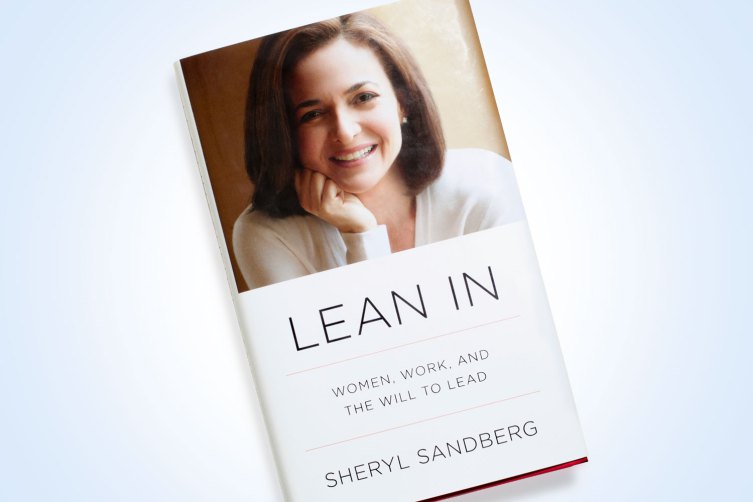
Book review: http://www.nytimes.com/2013/
Some opinions about her: http://www.latimes.com/news/
In general, I think it's not that effective when a super-successful outlier person tells everyone else, "You can be like me." Same goes for books from Obama, Jack Welch, etc. I know Sandberg isn't saying that explicitly, but she is a role model. Sandberg is an amazing story, but got a lot of help and special opportunities (and luck) along the way. Most working women will find themselves under more constraints, even if they are as sharp as Sandberg. I like the part of Sandberg's message that women shouldn't be their own worst enemy and limit themselves from their own fears. If you have a problem with something, stand up and do something about it. I think that advice applies to a lot of men too. All around us are messages and influences that say, "You can't do this, you can't do that, don't stick your neck out, just play it safe." But sometime they're right, because there isn't a 2nd chance if we take the wrong risk. And generally women have less room for error (partly due to our sexist culture). What about all the other Sandberg types who didn't make it big - maybe accidentally pissed off a boss or got pregnant at the "wrong time" or picked a bad company along the way? They had just as much potential and worked just as hard, but the truth is we often don't have much control of our destinies - even in the "meritocracy" of Silicon Valley.
To me, the irony of her message is that all the "bad" habits that Sandberg says women practice that hold them back (being humble & compromising, seeking out a mentor, second guessing - which gets a bad rap but often times saves one from a mistake!), are actually good working (and life) behaviors! Remember how Bush was seen as so much more "decisive" and "bold" than Kerry or Gore? Hitler was decisive and bold too (not implying parity among those leaders!). We know women are generally better human beings than men. It's just that the asshole men that tend to run the world don't do those civil things and take advantage/dismiss people who do. So once again, it's not "passive women" who are the problem, but ultra-aggressive/selfish/
Monday, February 11, 2013
The biological consequences of stress

http://www.pbs.org/programs/
http://en.wikipedia.org/wiki/
Maybe some of you have read into this stuff already. I wish I took a class from that Sapolsky prof. - his beard is badass (and he's super smart of course). Recently science has found a simple way to measure how much your body is aging - the length of your telomeres (structures connected to your chromosomes). The more times your cells divide, the shorter the telomeres get, and the closer your cells are to "death" (cells can only divide a finite # of times). Not sure how that relates to physical death, but older cells generally don't perform as well. As you would expect, stress increases the rate of telomere shortening. The doc is from NatGeo, but I think they were a bit fast and loose with their conclusions based on what limited data they provided. However, they did a study of Marin County moms who take care of disabled kids vs. moms with non-disabled kids. The former group had shorter telomeres (on average 6 years older than their calendar age) and complained about more health issues. We know that conception is less likely for couples under stress, but apparently stress can also affect fetal development. This part was a little sketchy, but they did a survey of Dutch children born during a terrible famine under Nazi occupation. Their moms were likely under a lot of stress. The kids are now elderly, and they reported higher incidence of chronic illness and emotional problems. I am not sure if that difference is statistically significant vs. peers, but I do believe that an expecting mom under stress probably isn't a good thing.
Also related to stress and health outcomes is your work environment. The UK performed a study on public workers and found that the mortality rates of low-level workers were 3X higher than upper managers (mostly driven by cardio health). Of course job level may correlate with amount of vacation time/financial security, and a multitude of factors are likely at play (socioeconomic background, education, diet, etc.), but not sure if they controlled for those. The theory is that the stress imposed by lack of empowerment & control, and managerial pressure have negative impacts on your biology. So yes, your boss may in fact be killing you. :)
The workplace and social hierarchy stuff ties into Sapolsky's research on baboon colonies. They are evolutionarily fit creatures (despite having bright red faces and butts), so they have about 9 hours of free time per day when they're not hunting and sleeping. They use that time to either torment each other or build social bonds. The "alpha asshole" baboons were dominant and often harassed the others to maintain their social positions. The beta baboons were marginalized. Just like middle school or the office. The alphas get first dibs on food of course, but for one colony it was bad because they happened to dine on diseased meat in the garbage of a human settlement. So all the alphas died. The betas then "took over". Did they become jerk alphas in their place? Nope, they maintained their submissive, "nice" ways. The colony on average spent less time fighting and more time grooming (a primate form of relaxation and bonding). They lived longer and looked healthier. And they propagated these traits to the next generation, so the colony continues to be more Utopian than others. If they can do it, what is our excuse? Maybe we need to get rid of all the assholes, for everyone's health? :)
Of course a lot of stress is self-imposed. So I think we have to say enough is enough and learn to let go. I definitely need to. It's not worth killing yourself over.
----------
conclusion: we should take out all of the assholes? do you think this cop in LA may be doing what is best for society? maybe alot of these massacre killers are highly evolved and trying to move us to the next level by getting rid of what they perceive as the alphas? hey, someone had to say it.
----------
That is basically the plot of this Angelina Jolie movie from a while back: http://en.wikipedia.org/wiki/
These elite hitmen use a magic device to get the names of bad people that they need to whack in order for the world to keep going. But things turn south when the device gives them their own names. DUN DUN DUN!! (I could narrate trailers if I had a deeper voice).
Well, the mass killers in CO and CT targeted innocents, not "assholes". I am not sure what is going on with the LA case, but I am sure that cop had some legit injustices inflicted upon him. Civilized people are just not permitted to use violence for revenge, even if we're persecuted by assholes. Religions say that we'll be rewarded in the afterlife for our tolerance. I sure as heck hope so. Bullies are the worst scum of the earth, but we can't beat them with violence or we may become then. Some would say we have to make exceptions for people like Hitler, but it's a slippery slope (i.e. did we have to firebomb Dresden to stop Hitler, who was clearly going to lose by late 1943?).
LOL: "they also shot another guy they thought was dorner....he looked just like him, but he was about 100lbs. less than dorner and he was white." Yeah it gets bad when a guy targets cop families. They all get itchy trigger fingers and circle the wagons. It's interesting that they are making absolutely ZERO effort to resolve this peacefully. Some other mass killers surrendered when the cops came. Something can be worked out of they give it a serious effort. But they are out for blood now, even if it's unconstitutional. Hell that whole Constitution thing didn't stop Obama and his drones. And he was the "nice" choice for president.
Instead of resorting to violence to enforce justice, our societies need to learn to change priorities and incentives. Now we reward asshole behavior and basically punish nice behavior. We have to flip that on its head (some "primitive" societies already do - but we look down on them), but good luck when it's the assholes making the rules and the $. It's the human effing condition. But like Sapolsky said - ditch this BS and live in rural Africa. He felt truly happier and healthier when he was there and can't wait to go back. The French expats I met in Polynesia look happy and healthy too. They married nice island girls and take tourists on snorkel trips every day. Now who is the alpha dog?
----------
show me one supposed cop killer that is taken alive. it ain't gonna happen. also, there is no real evidence tying him to the killings of that cop's family members. we'll never know the truth b/c this guy is dead. they will never let him say another word and he sure as shit will not see the inside of a courthouse.
some north american native tribe used to react to antisocial behavior by
bringing everyone closer to the person. it was the tribe's
responsibility collectively for the tribe's behavior. just seems the
zero tolerance/punitive response isn't working real well....
and, i've seen those ex-pats. certainly looks like a nice life....stress is greatly reduced.-----------
Yeah I agree with that, it's Wild West "justice" for the LAPD and other such orgs when they feel the blue line has been crossed.
That is a good point about the Native American collective remedy to antisocial behavior. In the US, we celebrate some sociopaths (athletes, Hollywood, financiers, etc.), and ostracize others (to institutions, prisons, the streets, etc.). It's a billion-dollar industry to segregate people in America. Maybe it has to do with our ultra-individualistic mentality and culture vs. more "social" societies. Hehe I guess that makes us an antisocial society. Though a prof recently told me that the US is not the most individualistic culture... that is actually Israel. Not sure how it was measured, but in that study it was more about defiance of authority rather than collective problem solving. But clearly the East Asian, Latino, and African cultures are much more collectivist than ours.
PS - speaking of "Latino", with the immigration debate going on, I am just so tired of the word "Hispanic". That is the stupidest name ever - totally artificial and irrelevant to everyone but Columbus. I was told that the Reagan admin. popularized it, but not sure if that is true. To me it's worse than "Oriental", which personally I don't find offensive at all. It sounds exotic. :)
Wednesday, August 11, 2010
What the JetBlue employee meltdown says about the US workplace and society

http://www.kqed.org/a/forum/
By now you've probably heard the buzz surrounding Steven Slater, the
veteran JetBlue flight attendant who was harassed by a passenger on a
flight and decided to say "F this job!" and illegally exited the plane
down an emergency chute, with beers in hand. Maybe he was living out
all our closet fantasies (and paid the price by going to jail, but
he'll get the book deal and TV circuit). I'm sure he would have
preferred to do his job (of 28 years) happily with others treating him
respectfully. Though what does that say about the state of the US
workplace and society if Slater is now celebrated as a folk hero for
breaking the law, possibly putting people in danger, and acting
against everything in his professional training? That customer must
have been an astronomical bitch because JetBlue FAs are some of the
best in the industry, and probably have very thick skins after years
of abuse and training. But honestly, I'm sure we all have a list of
people we'd like to curse out on the PA system, and many
jobs/customers that we'd like to stick it to.
I'll try to refrain from a cliched anti-society diatribe, but humor me
with this set-up. I know we tend to remember the "good ol' days" with
rose-colored lenses, but we probably weren't always this stressed out,
this nasty to each other, and work wasn't this horrible, was it? Some
things have changed since the last generation was young. We usually
don't have pensions anymore (and don't stay with 1-2 firms our whole
career), nor just one car/TV per household. Standard of living and
life expectancy have risen, but so have costs, while real wages
haven't kept up (unless you're a CEO, and in that case your wages have
ballooned). For many of us, the finer things in life are still
unaffordable without taking on dangerous debt, but we still try: total
US consumer debt is now in the trillions, our pre-recession savings
rate was negative, and savings is currently still worse than postwar
America. We have also segregated ourselves into many racially and
economically homogeneous suburban enclaves, and may not need to have
"real interactions" with strangers for days at a time (automate
everything, drive-thru everything, hurry up and be on your way).
Culturally, it's also strange now that it's accepted and almost
desirable to act like a spoiled good-for-nothing like Paris Hilton, a
cocksure idiot like Sarah Palin, or a pathologically ambitious a-hole
like The Donald. What happened to doing right by people and making an
honest buck? Sorry, I'm 30 and I sound 70.
When IBM envisioned the first computers, the designers hoped that they
would help humans by saving us time on repetitive, grunt work
calculations. But since the PC revolution, computers and mobile
electronics have only served to take time from us. Yes computers allow
us to be more productive, but now employers demand more of us (and
practically expect some workers to be on-call 24-7, plus some tech or
work-addicts even do it to themselves, checking their BlackBerries at
completely inappropriate times). An average, not even an excellent,
worker is now doing the jobs of 2-3 workers from 1960, and many
traditional US industries have vanished or relocated overseas. Gadgets
and the internet have allowed us to share ideas and access resources
like never before (for better or worse: tolerance of diversity has
increased, but so have all sorts of cyber-crimes), but also bleed us
of our precious free time (and money) with semi-pointless,
quasi-social distractions like Facebook. Families spend less time
together (maybe a good thing depending on the family), and even less
quality time. We may spend more time exhausted in front of a screen
than raising our kids.
Competition for quality education, jobs, government services, and
other basic living essentials has risen drastically. Workers are
spending more time in commute, more time in travel-heavy jobs, and
more time at work in general vs. the 1960s. The rich-poor gap has
increased, and more Americans are employed by corporations than ever
before. Executives and managers are under more pressure from
shareholders and others to cut costs, innovate, and find new ways to
boost productivity/efficiency, even at the cost of worker morale and
the law. Forget the work-life balance; for many people work is life,
which makes the personal pain of an unsatisfying job or losing a job
even harder to handle. The recession has only exacerbated these
tensions and problems.
All this creates an environment for people to treat each other badly,
and we have many pressures and incentives to do so. Our egos fall
victim to our competitive free-market culture, and we may equate
differences in wealth/achievement with differences in personal worth.
"I'm a big-shot doctor, so I can talk down to you, lowly flight
attendant! I paid my ticket and I can do whatever I want!" Worries and
threats are everywhere. Bad news on the 24-7 channels, bills coming
due, and everyone seems to try to take advantage of us, make us part
with our hard-earned money, or otherwise short-change us somehow.
Politicians are always in scandals, there is less public trust, and
therefore less trust and courtesy for each other. When anxiety is
high, we are not ourselves, or is that our true nature? We have less
time and more stress, so we're living on the edge with a shorter fuse,
and minor annoyances or injustices could cause us to blow up. And as
the many life annoyances wear us down each day, we have less patience
and energy to handle the big problems and confrontations with poise.
And it doesn't seem that this trend is going to reverse any time soon.
But no one wants to acknowledge the insanity of our predicament for
fear of appearing weak and unable to cope.
Maybe an airplane is a microcosm of our social condition. A bunch of
impatient, tense strangers, who would rather be somewhere else doing
something else, packed in an uncomfortable, artificial enclosure with
bad air. There are turbulence, crying kids, and terrorist threats, and
of course weather and technical delays. The only things keeping us all
from descending into chaos are watered-down cocktails, an LCD screen
in front of us, and Sully Sullenberger.
Tuesday, August 10, 2010
"Why parents hate parenting"

http://nymag.com/news/
http://www.kqed.org/epArchive/
As a rule, most studies show that mothers are less happy than fathers, that single parents are less happy still, that babies and toddlers are the hardest, and that each successive child produces diminishing returns. ...Robin Simon, a sociologist at Wake Forest University, says parents are more depressed than nonparents no matter what their circumstances—whether they’re single or married, whether they have one child or four.
...all parents spend more time today with their children than they did in 1975, including mothers, in spite of the great rush of women into the American workforce. Today’s married mothers also have less leisure time (5.4 fewer hours per week); 71 percent say they crave more time for themselves (as do 57 percent of married fathers). Yet 85 percent of all parents still—still!—think they don’t spend enough time with their children.
...Daniel Kahneman, a Nobel Prize–winning behavioral economist, who surveyed 909 working Texas women and found that child care ranked sixteenth in pleasurability out of nineteen activities. (Among the endeavors they preferred: preparing food, watching TV, exercising, talking on the phone, napping, shopping, housework.) This result also shows up regularly in relationship research, with children invariably reducing marital satisfaction.
Well that's a bit of a loaded question, since what kind of masochist enjoys child care? They enjoy playing with their kids, showing off their kids, and watching them do cute things, succeed, and grow up. But who would like the maintenance? You may love driving your sports car, but that doesn't mean you like getting dirty to change the brake pads. But personally, I will always prefer napping to anything involving a kid. Also, I'm sure many single or child-less people also wish they had more personal time (I surely do).
LOL:
It was big news last year when the Journal of Happiness Studies published a Scottish paper declaring the opposite was true. “Contrary to much of the literature,” said the introduction, “our results are consistent with an effect of children on life satisfaction that is positive, large and increasing in the number of children.” Alas, the euphoria was short-lived. A few months later, the poor author discovered a coding error in his data, and the publication ran an erratum. “After correcting the problem,”it read,“the main results of the paper no longer hold. The effect of children on the life satisfaction of married individuals is small, often negative, and never statistically significant.”
Any why is this happening?
Before urbanization, children were viewed as economic assets to their parents. If you had a farm, they toiled alongside you to maintain its upkeep; if you had a family business, the kids helped mind the store. But all of this dramatically changed with the moral and technological revolutions of modernity. As we gained in prosperity, childhood came increasingly to be viewed as a protected, privileged time, and once college degrees became essential to getting ahead, children became not only a great expense but subjects to be sculpted, stimulated, instructed, groomed. (Princeton sociologist Viviana Zelizer describes this transformation of a child’s value: “Economically worthless but emotionally priceless.”) [me: raising a kid in the US from age 0 to 18 now costs $250,000 on average] Kids, in short, went from being our staffs to being our bosses. [me: this of course affects parental discipline]
This is especially true in middle- and upper-income families, which are far more apt than their working-class counterparts to see their children as projects to be perfected. (Children of women with bachelor degrees spend almost five hours on “organized activities” per week, as opposed to children of high-school dropouts, who spend two.) Annette Lareau, the sociologist who coined the term “concerted cultivation” to describe the aggressive nurturing of economically advantaged children, puts it this way: “Middle-class parents spend much more time talking to children ...and treating each child’s thought as a special contribution. And this is very tiring work.” Yet it’s work few parents feel that they can in good conscience neglect, says Lareau, “lest they put their children at risk by not giving them every advantage.” [me: isn't that a sad reflection of our competitive, me-first, never-enough society?]
Even more surprisingly, they found that parents’ dissatisfaction only grew the more money they had, even though they had the purchasing power to buy more child care. “And my hypothesis about why this is, in both cases, is the same,” says Twenge. “They become parents later in life. There’s a loss of freedom, a loss of autonomy. It’s totally different from going from your parents’ house to immediately having a baby. Now you know what you’re giving up.” (Or, as a fellow psychologist told Gilbert when he finally got around to having a child: “They’re a huge source of joy, but they turn every other source of joy to shit.”) [me: if only it wasn't so true]
It wouldn’t be a particularly bold inference to say that the longer we put off having kids, the greater our expectations. When people wait to have children, they’re also bringing different sensibilities to the enterprise. They’ve spent their adult lives as professionals, believing there’s a right way and a wrong way of doing things; now they’re applying the same logic to the family-expansion business, and they’re surrounded by a marketplace that only affirms and reinforces this idea. “And what’s confusing about that,” says Alex Barzvi, a professor of child and adolescent psychiatry at NYU medical school, “is that there are a lot of things that parents can do to nurture social and cognitive development. There are right and wrong ways to discipline a child. But you can’t fall into the trap of comparing yourself to others and constantly concluding you’re doing the wrong thing.”
The only peer-reviewed study that uncontroversially concluded that kids improve parents' happiness was conducted in - you guessed it - Northern Europe.
The researcher, Hans-Peter Kohler, a sociology professor at the University of Pennsylvania, says he originally studied this question because he was intrigued by the declining fertility rates in Europe. One of the things he noticed is that countries with stronger welfare systems produce more children—and happier parents.
Of course, this should not be a surprise. If you are no longer fretting about spending too little time with your children after they’re born (because you have a year of paid maternity leave), if you’re no longer anxious about finding affordable child care once you go back to work (because the state subsidizes it), if you’re no longer wondering how to pay for your children’s education and health care (because they’re free)—well, it stands to reason that your own mental health would improve. When Kahneman and his colleagues did another version of his survey of working women, this time comparing those in Columbus, Ohio, to those in Rennes, France, the French sample enjoyed child care a good deal more than its American counterpart. “We’ve put all this energy into being perfect parents,” says Judith Warner, author of Perfect Madness: Motherhood in the Age of Anxiety, “instead of political change that would make family life better.”
I'm not so sure about the strong welfare-more children link, because some data suggest the reverse. Birth rates are still quite low in strong social welfare states like Japan and Germany, but also low in poor welfare nations like Russia and Bulgaria. Sometimes people in rich nations decline to have kids not for the stress reasons, but because they're interested in other stuff, especially in their "prime years". They go to graduate school, have busy jobs, travel, buy things, volunteer, and maintain hobbies/friendships/online life. And before they know it, they're 40 and can't conceive even if they wanted to (except for Palin). When teens basically "need" smartphones and laptops to manage their relatively simple lives, us adults have even more chores/distractions, so there's no void/need to fill with a baby. So I suppose the self-centered Western lifestyle can motivate some couples to have kids and others to not. Third World families are bigger partially due to lack of education and access to family planning tools. But they also willingly birth a lot of kids as insurance against infant mortality, but also as a labor source and for material support in old age. A strong pension system precludes the need for many kids to support you.
But it's very true that strong social support makes parenting so much easier, as a previous email described (http://worldaffairs-
What about a couple's romantic life? You guessed it.
This is another brutal reality about children: They expose the gulf between our fantasies about family and its spikier realities. They also mean parting with an old way of life, one with more freewheeling rhythms and richer opportunities for romance... Healthy relationships definitely make people happier. But children adversely affect relationships. ...Psychologists Lauren Papp and E. Mark Cummings asked 100 long-married couples to spend two weeks meticulously documenting their disagreements. Nearly 40 percent of them were about their kids. “And that 40 percent is merely the number that was explicitly about kids, I’m guessing, right?” This is a former patient of Nachamie’s, an entrepreneur and father of two. “How many other arguments were those couples having because everyone was on a short fuse, or tired, or stressed out?” This man is very frank about the strain his children put on his marriage, especially his firstborn. “I already felt neglected,” he says. “In my mind, anyway. And once we had the kid, it became so pronounced; it went from zero to negative 50. And I was like, I can deal with zero. But not negative 50.”
... The amount of time married parents spend alone together each week: Nine hours today versus twelve in 1975. Bradbury, who was involved in the UCLA study of those 32 families, says the husbands and wives spent less than 10 percent of their home time alone together. “And do you think they were saying, ‘Gee honey, you look lovely. I just wanted to pick up on that fascinating conversation we were having earlier about the Obama administration’? ” he asks. “Nope. They were exhausted and staring at the television.”
A possible silver lining and what it all means for your decision for children:
We know that having kids increases stress/fatigue and reduces happiness/freedom. On the other hand, the married women were less depressed after they’d had kids than their childless peers. And perhaps this is because the study sought to understand not just the moment-to-moment moods of its participants, but more existential matters, like how connected they felt, and how motivated, and how much despair they were in. ...Parents, who live in a clamorous, perpetual-forward-motion machine almost all of the time, seemed to have different answers than their childless cohorts. ...Technically, if parenting makes you unhappy, you should feel better if you’re spared the task of doing it. But if happiness is measured by our own sense of agency and meaning, then noncustodial parents lose. They’re robbed of something that gives purpose and reward.
“When you pause to think what children mean to you, of course they make you feel good,” [Gilbert] says. “The problem is, 95 percent of the time, you’re not thinking about what they mean to you. You’re thinking that you have to take them to piano lessons. So you have to think about which kind of happiness you’ll be consuming most often. Do you want to maximize the one you experience almost all the time”—moment-to-moment happiness—“or the one you experience rarely?”
“I think this boils down to a philosophical question, rather than a psychological one,” says [Cornell psychologist] Gilovich. “Should you value moment-to-moment happiness more than retrospective evaluations of your life?” He says he has no answer for this, but the example he offers suggests a bias. He recalls watching TV with his children at three in the morning when they were sick. “I wouldn’t have said it was too fun at the time,” he says. “But now I look back on it and say, ‘Ah, remember the time we used to wake up and watch cartoons?’ ” The very things that in the moment dampen our moods can later be sources of intense gratification, nostalgia, delight.
Dan Ariely, who wrote those behavioral economics books on irrationality, studied how people tend to value the exact same item more if they possess it than if they don't and others do. Part of that is egotism, and no one wants to regret what we've already committed to as a good idea at the time. We're so glad that we didn't buy that blue house that turned out to have termites, but we love our beige house even though it has wiring problems. No one wants to admit that having their kid was a mistake, especially to his/her face. But humans err. Maybe having kids was a mistake for many couples out there (post-children divorce rates may suggest that, even though the couples may cite other excuses for their split). But they're trying to make the best of it and derive as much purpose as they can (forget pleasure). They may know deep down it was a mistake, and maybe wish for another crack at life, but in the meantime they want to make something good out of their "mistake", so the sacrifice was not in vain. Like how some families of soldiers needlessly killed in wars of choice still force themselves to believe that their child died a hero to "protect freedom".
No one is saying that people should only engage in activities that are guaranteed to produce 100% satisfaction and zero regret. That's impossible, and makes life boring frankly. But at least for kids, we have to be realistic. For many middle-class Americans, having a kid means decades of stress, fatigue, zero to uninspiring sex, unhappiness, and maybe divorce/poverty. But is that "sacrifice" worth it to gain the special pride, "joy", and nostalgia at the beginning and in the end - if you survive it - that child-less people can never know? For some people, it's a resounding "yes". For others, they have kids without contemplating it, or have kids unplanned. Though to be fair, it's not like we get to have a preview of what our future parental life will be when we're deciding. At best, we can just examine the case studies of our friends and relatives, and see if that type of life would be appealing.
But we also need to temper expectations. We can get some of the benefits of parenthood for a smaller blood sacrifice. So what if we don't dote on our kid 24-7, and he/she doesn't go to Space Camp and Harvard? Even if everyone on our block is doing it, and looks down on us as "bad parents", who cares? The kid probably won't become homeless or Charlie Manson if you skip ballet lessons. As long as there's love, morals, and common sense, no one else needs to "approve" of your parenting methods and limitations. And there's no need to kill yourselves trying to give your kid stuff that he/she may not even need or want. You have a life to live too, and a worn-out parent may be worse for kids than a "less committed" one. Forget about the Joneses, do less, buy less, don't take the promotion if you can't handle the extra workload, and maybe you'll have time to actually enjoy family life. Quality, not quantity. On the other hand, people with kids should realize that they can't perfectly maintain the single or couple life anymore. There's another term in the equation, and each spouse will get less attention now. Yes couples can and should spend time and money on themselves, but obviously if the choice is piano recital or poker game, you have to do the grown-up thing. And loving spouses can't be so demanding and expect their partners to keep off the love handles and do all the little romantic things they did during dating, while also performing well on the job and as a parent. It doesn't mean he loves you less, but now the relationship is different. We give up some stuff to get other stuff. Flexible, realistic, and understanding spouses and parents have a better chance in the minefield of child rearing. Those who "want it all" and won't take no for an answer are setting themselves up for a life of misery and disappointment, which will reflect on their kids as well.
Thursday, October 1, 2009
Growing up

Regarding aging, it's too bad that people on the post-graduate education route need to devote so many years (and money) towards that cause, while not really being able to set down roots due to student loan repayments, less-than-secure employment, high cost of housing, etc. So when all is said and done, people are almost "starting adult life" at 30, when a generation ago they would have 2 kids and the white picket fence by then. And for those who want a family these days (I'm still on the fence, but my wife wants kids, so I guess it would be selfish of me to deprive her of that), they have to navigate that social maze while also working long hours as a junior-level employee hoping to advance. There just doesn't seem to be enough time for all the stuff that adults said we were entitiled to growing up. And like your friend working for the foreign service in Asia, I think there are many really interesting, rewarding international jobs out there where one could learn a lot and grow as a person, but it seems fairly incompatible with relationships/family. Plus our parents are getting older and we may need to support them more and more with our time and resources.
So I guess I am feeling some trepidation about the future after all, and how to balance these various commitments and choices. After visiting some friends in France/Holland recently, and seeing how their way of life is becoming more and more "American" (i.e. competitive, stressful, hurried, individualistic, unhealthy), I can't help but feel a bit sad. Their postwar governments and companies made strong efforts to maintain a decent quality of life for people (immigrants and the poor still falling through the cracks of course) through universal health care, generous unemployment insurance, free or heavily subsidized child care and university, as well as the 35-hour week and 5 weeks vacation. Maybe such a paradigm is foolish and unsustainable in the cost-cutting globalized economy, but I respect them for trying. It's not like Europe is Utopia, but their health and happiness metrics are higher than ours, even though they are less rich by some measures.
All the young American parents I know are stressed as hell. I am not sure if your relatives and circle of friends are the same. I know they say their kids give them so much joy (would any parent admit that they regret having kids though?), but they're always running around, behind on work, mostly eating fast food, and getting ill more often. They don't follow the news much and seem "out of touch". I know it's just qualitative and anecdotal, but their bodies look worn and their lives seem to revolve around kid stuff (like they don't do their hobbies anymore, and if they are lucky enough to have a night out to the cinema, it's to see "Finding Nemo"). I think parents should spend a lot of time with their kids of course, but maybe more balance is healthier? Of course if we had to work less, and wasted less time in traffic or at the mall, there would be more time for recreation and self-maintenance. And then there are those freaky "super-parents" who run 5 miles a day, have great, well-behaved kids, and kick butt at their jobs. Maybe it's the cocaine! But seriously, it's a sad reflection on our society that moms are a surprisingly prominent demographic for meth use. There's just too much for them to do to be "good moms", trying to live up to the impossible expectations that the jerks in media, marketing, etc. place on women.
I don't know. There are many ways to live life happily, and it's not required for everyone to have kids (actually if we did, it would be really bad for the Earth). Many people find great satisfaction with their spouses, jobs, or life callings and that seems to be enough. I just know that I will never love my job on my current path, and probably jobs I could love are now out of reach due to my life choices. Lauren and I just adopted a dog, and I think my plate is plenty full with taking care of the dog, condo, and trying to be a good husband/son. I am sure you, Mark, and most everyone else feels pressed for time too. I guess I am mostly content with my life at present, but I am not thrilled with the possible paths ahead of me.
Subscribe to:
Posts (Atom)