- New bipedal robot from Boston Dynamics is amazing, terrifying, and pitiful all at once
- We already knew that tech workers can be immature and insensitive, but this suggests that elite wealth/education isn't doing a good enough job on race issues either (and living in the cosmo. Bay Area doesn't guarantee racial awareness either)
- BTW, MS-FB-Google are ~2% black, and Apple is super-diverse at 8%
- This Trump thing has evolved from a joke/curiosity to real national concern; if he wins the nomination, then ALL OF US seriously have to volunteer (and get our networks to do so, also) to help his main rival, if we care about America
- http://youtu.be/DRauXXz6t0YIt is understandable for some to oppose abortion, but this video describes the almost cruel/vindictive ways that some red state governments obstruct patients and providers. America is not even going after ISIS this passionately.
- More John Oliver recently vs. Trump: http://www.vox.com/2016/2/29/
11132366/john-oliver-donald- trump-last-week-tonight As his GOP rivals said, the guy is a glorified watch salesman; all talk/image no substance. Maybe supporters are voting for the name, just like Clinton I guess (I assume most of her supporters can't really articulate her major career accomplishments and Senate voting record). We buy based on what we think the benefits of the brand are, and brand ultimately leads to happiness more than product features. But Oliver's point was that the "Trump" image has nothing to do with the candidate/man (he can understand why people like the mythical notion of a "Donald Trump" leading America, but that is not what we'll get on inaug. day). Actually his actions only merit the "Donald Drumpf" brand.Very entertaining, but the only downside is that it could help Rubio/Cruz (whose stated policies are not that different to those of Trump). However, I don't know which of these guys pose the greatest challenge to Hillary (I support Sanders, but I know the odds are against him).
Showing posts with label facebook. Show all posts
Showing posts with label facebook. Show all posts
Wednesday, March 2, 2016
News potpourri

Friday, December 4, 2015
Zuckerbergs plan to give 99% of their FB shares to charity
https://finance.yahoo.com/
We will give 99% of our Facebook shares -- currently about $45 billion -- during our lives to advance this mission. We know this is a small contribution compared to all the resources and talents of those already working on these issues. But we want to do what we can, working alongside many others.
Small
contribution - is that like humble bragging? :) All US corporations
give about $15-20B/year, so Zuck can spot corporate America for like 3
years. We will give 99% of our Facebook shares -- currently about $45 billion -- during our lives to advance this mission. We know this is a small contribution compared to all the resources and talents of those already working on these issues. But we want to do what we can, working alongside many others.
https://www.charitynavigator.
---
I'm imagining a time 20 or so years from now when we find that the extremely well funded pet projects of these super rich are found to be counterproductive in those communities. Similar to food aid to Africa destroying local food economies. So hopefully he, and others, donate to well established orgs instead of koch style spending.
---
Yeah I guess the impacts are yet to be seen. But I think Zuck will
be more like Gates than Koch (btw the Gates Fdn. is generally hailed as
the best run philanthropic NGO in the world). The mission is
sufficiently vague/broad that they could invest in almost anything
though. Maybe Zuck is already at the point in his career where he is
less concerned with his business empire and more focused on "moonshot"
projects and impacting humanity (like Gates circa 2000 and Page now). I
don't think selling more FB ads is what fires him up every morning (or
if it ever did).
On a side note, I do think that the IRS
should abolish all tax incentives for charitable giving (or maybe have a
very low cap on deductions like $1,000/pers and $100K per company).
That might impact the total amount of giving, but at least it sends the
message that rich people can't get "paid" to support their Koch-esque
pet project causes that are really political spending. Also, I don't
think rich donors should be rewarded for giving millions to some
orchestra (whose customer base is almost exclusively rich people) or a
university so their name can be on a bldg -> causes like that which
have questionable overall social benefits.---
I just heard something on PRI that hasn't made it to the web yet re: Zuck's donation: http://www.pri.org/search/
As
I said in the OP, it's could be a double-edged sword when stock shares
are donated to NGOs, or when those orgs invest their endowments in the
markets. Of course these groups would prefer to make (tax free) cap
gains so they can advance their mission more, but there can be a tension
between their mission and how their cap gains are generated.http://www.newyorker.com/news/
---
His
fund called Generation (a tiny $12B under mgmt. but growing) is gaining
attention because it only invests in ostensibly green, sustainable,
ethical businesses. These businesses also happen to be outperforming
their dirtier (in many senses of the word) rivals. But maybe it has less
to do with ethics/cleanliness and more to do with "proper capitalism" -
firms that preserve and grow value with a long-term horizon in mind
(i.e. businesses that Buffet types like), not the quick buck companies
at the mercy of the quarterly earnings report (to show short-run gains,
they often have to sacrifice long-term value and social/environmental
good).
We know that the average fund manager
(even hedge funds) barely outperform passive index funds (way to earn
their salaries), and most definitely don't sustain abnormal performance
over time (regression to the mean). But so far Generation's global
equity fund is earning 12% returns vs. 7% for index funds and
traditional funds (after mgmt. fees). And Generation is one of the least
volatile funds of its class, which investors also love to see.
Unfortunately they won't take investors with less than $3MM to
contribute. :PWednesday, October 15, 2014
Apple and Facebook offer employees egg freezing benefit
News
broke that Apple and Facebook provide a new benefit to female
employees: they will cover the costs of egg freezing up to $20K.
Bloomberg Businessweek says this is the "great equalizer" to "liberate"
women, but I call BS. It is pretty disturbing to me for several reasons.
We
know that tech is fairly misogynist and gender-unequal, especially in
leadership and technical roles. Despite Sanberg's "Lean In" evangelism,
most FB leaders are male (the major female execs are her, and in the HR
dept). Apple and Google are similar. I don't know if the egg freezing
benefit is the most crucial thing that women in tech (or prospective
women) need now. In this 2011 list,
Apple-FB-Google did not make the top 100 best companies to work for as a
mom, despite offering great mat-leave, health care, and subsidized
onsite day care. Why? Because the stress and workloads are not worth it.
You can set up massage and watering stations at each mile of a Marathon
course, but it's still a painful grueling Marathon.Lastly, what about the whole cryo-egg/IVF approach? Obviously it is not an option for most women, and is generally monopolized by wealthier white/Asian people (which tech is too). Will this further the rich-poor & racial gaps? Older pregnancies are a larger health risk for both mother and child. One option is a surrogate mom (pay a younger, poorer lady to carry your fetus - she's just renting out her excess capacity like AirBnB, right?). That is such a First World Problem: build vs. buy right? Outsource the non-value-add stuff, so you can focus on making money. Never compromise, innovate to have your cake and eat it too.
But it also reeks of exploitation. It's kind of sick - search for "surrogate mother" and you get a bunch of ads and sites trying to recruit wombs. Obviously demand > supply, especially with the rise of the Chinese upper class. And older couples who want to conceive will often pay any price. Those with medical need should have access to IVF, but what about those who elected to delay parenthood for their careers? That is kind of like paying to jump the line at Disneyland, or for organ donation. Clearly such procedures like IVF are not equal-opportunity, but the poor have the opposite problem - they sometime have too many kids because of lack of education and access to affordable contraception (as we discussed previously during the Hobby Lobby ruling).
There is even "surrogacy tourism" where Western couples lease a Third World womb (really, are they that cheap that they have to offshore it?). A case in Thailand made the headlines because an AUS couple may have "abandoned" one of their twins after discovering he had Down's (they left him with the surrogate Thai mom and returned home with the "desirable" twin). This is just one incident, but you can imagine the ethical and legal minefield that surrogacy presents.
All the sci-fi stuff from our childhood like Brave New World and Gattaca seem to be getting too close for comfort. Those in the "elite" class get all the privileges and get to lead charmed lives (yes, you can have it all when you work for Apple/FB!), and the rest of humanity just serves them, with the narrow/false hope of joining their ranks some day.
-----
This may also be a symptom of the competitiveness of silicon valley. What else can you offer once money, food, on site massage, etc is covered? The incentives are only going to get weirder at this point.
-----
I agree that there is an "arms race" re: employee benefits to attract good talent, but remember that Google, Apple, and maybe some others got sued for anti-competitive practices (no engineer poaching collusion to keep comp in check), but FB was not involved. So I guess several forces are affecting benefits. Supposedly US raises are being depressed by the rising costs of health coverage too.
If you took a poll at Apple on what new/enhanced benefits the workforce really wants, I doubt that egg freezing would be high on the list. I think it was a pet project by some HR person to "be innovative" and make some news. I assume the workforce really wants (1) more pay, (2) more vacation (true vacation, as in totally unplugged time), (3) more flex time, and (4) more coaching/training/career dev, not necessarily in that order. But most employers won't budge on that stuff. Speaking of vacation, some companies like Netflix offer unlimited paid vacation. But as you can imagine, this could have the opposite effect (workers scared to ask for a lot of time off, and without a vacation stipend, the firm saves money by not paying out unused balance).
There are some "nefarious benefits" that actually benefit the firm more than the worker. Like offering free dinner - that could encourage workers to stay later (with no OT pay) and the company gets a little more productivity out of them (even if they goof off much of that time). It got so bad at EA that workers sued to reclaim OT and become hourly workers, so at least they get comped for their longer hours. So I think the egg freezing is part of that - it delays family life, which benefits the company possibly at the expense of the worker.
Monday, December 16, 2013
Silicon Valley as a preview of America's future, for better or worse
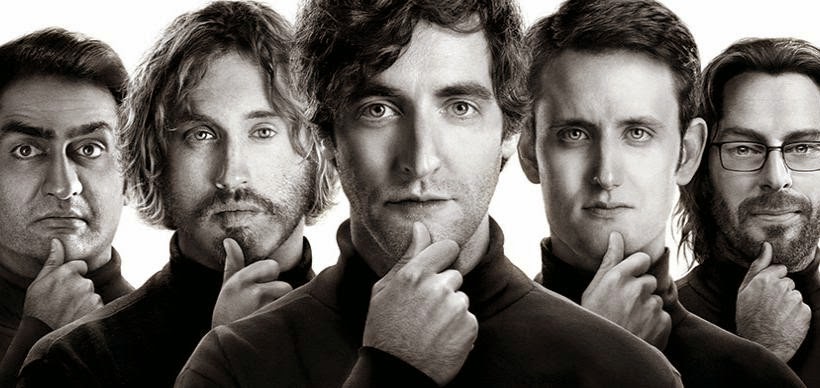
First of all, is Snowden the runaway favorite for person of the year 2013? I can't think of anyone else who affected US society more (and likely for the better). A Federal judge ruled that the arbitrary, blanket collection of Americans' phone metadata is likely unconstitutional (unreasonable search, violation of reasonable expectations of privacy) and ineffective (no clear evidence it was critical to preventing attacks). Of course the WH and NSA disagree.
----
http://www.npr.org/blogs/
Now car services like Uber are getting rave reviews from customers, media, and generating decent financials. But what if they render thousands of low-skilled immigrant cab drivers out of a job? What if the Google self-driving car renders the Uber drivers out of a job? In some cases it is a zero-sum game, even if the metrics suggest that society overall is "better off". Does one new billionaire created compensate for 1,000 families who just got the American Dream taken from them? Everyone seems to celebrate the "winners" without considering the collateral damage. Yes, we need innovation to succeed and even survive in the world. And those who succeed should be rewarded. But what about the everyday folks who, through no fault of their own, get suddenly shifted from middle class to destitution? Do the disruptors (and the traditional companies being replaced) have a social responsibility to help those workers transition to the new reality? Does the government? If so, then I think they should fund such programs from the disruptors' stock gains.
-----
Sort of related (in that it perpetuates the massive inequalities of the Bay Area) is education. M Night Shyamalan just wrote a major book on education (hopefully he doesn't write more and his natural follow-up suck strikes!), and it makes a lot of good points.
Basically, he suggests that our education system is actually great - if
you're a a white kid. Our white kids do just as well as the Nordic white
kids or other European white kids. But if you're a minority (and,
typically, poor), the education system sucks and really drags down our
averages. There are a number of ways to address this, but:
1) They take money $$
2) And they mean de-emphasizing putting resources into already highly performing white schools
I've
come increasingly to the conclusion that American politics is all about
race. I'm sure many of you have seen the research that support for
redistribution increases if it is perceived by the voter as going to
"someone like them" - i.e. someone of the same race.
Most people in the Bay Area don't consider
themselves racist and it's probably true - in fact, the Bay Area is one
of the most diverse areas of the country. But poors in the Bay Area are
still "the other" - they didn't go to good schools, they struggle to get
by on bad salaries, their unemployment rate is x3 higher than
well-educated whites. Basically, their experience is completely alien to
most of the tech gods in the Bay Area and their presence is invisible.
No surprise then that the tech gods (which have actual power) use little
of their capacity to help the poors.
You can imagine the national consternation and
outrage by the well-educated press and electorate if the unemployment
rate was 20% and transportation and housing ate up 60-70% of the budget
of native-born, well educated Americans, yet this is exactly the
situation facing a plurality of Bay Area residents - the poors and the
immigrants. I guess it's only a crisis for those that are rich. If
you're poor and face such circumstances, given the media and elite
orientation, it's a statistic and at best regrettable. And the rich
wonder why resentment is on the increase...
-----
Thx, J. I agree, but why are non-whites disproportionately poor? Mostly racism. The 1% vs. 99% has also been a pervasive, ubiquitous problem for centuries, but of course the power balance has varied due to historical conditions. As you said, now more than ever gov't is serving the interests of the 1% at the expense of the 99% - and that is a big effing problem that we have to tackle if we care about democracy. But even if we returned to the economic conditions of 1960 when wealth and political power were more evenly distributed, there is the underlying racial problem that Andrew mentioned. Say we repeal Citizens United, reformed the justice system, and made a bunch of other needed changes - it will still be harder for minorities to get ahead. Addressing one problem is not a distraction from the other. Both are critical, somewhat independent, and deserve to be called out separately. There are some solutions that can mitigate both issues (namely taxation and campaign/election reforms), so we could try to prioritize those.
According to this moron, the poor and middle class are doing better than ever, because we are enjoying a "golden age of TV!" So what if I lose my job and get evicted... I can still watch the latest episode of "Duck Dynasty" at the local library's PC lab. Forget the macro indicators, our amazing selection of digital entertainment options makes life more fun!
http://www.bloomberg.com/news/
------
Thx, J. I agree, but why are non-whites disproportionately poor? Mostly racism. The 1% vs. 99% has also been a pervasive, ubiquitous problem for centuries, but of course the power balance has varied due to historical conditions. As you said, now more than ever gov't is serving the interests of the 1% at the expense of the 99% - and that is a big effing problem that we have to tackle if we care about democracy. But even if we returned to the economic conditions of 1960 when wealth and political power were more evenly distributed, there is the underlying racial problem that Andrew mentioned. Say we repeal Citizens United, reformed the justice system, and made a bunch of other needed changes - it will still be harder for minorities to get ahead. Addressing one problem is not a distraction from the other. Both are critical, somewhat independent, and deserve to be called out separately. There are some solutions that can mitigate both issues (namely taxation and campaign/election reforms), so we could try to prioritize those.
According to this moron, the poor and middle class are doing better than ever, because we are enjoying a "golden age of TV!" So what if I lose my job and get evicted... I can still watch the latest episode of "Duck Dynasty" at the local library's PC lab. Forget the macro indicators, our amazing selection of digital entertainment options makes life more fun!
http://www.bloomberg.com/news/
------
Oh the drama of "bus-gate": http://blogs.kqed.org/newsfix/
Thanks, A. Good to see M. Night making a comeback of sorts, with more social value than "The Happening". Yeah it seems the path to inequality starts from grade school, and maybe even in the womb, as lower income (often minorities) generally don't have access to comparable health, nutrition, and child care as affluent whites. This could set back their development, so that even if they were lucky enough to attend America's best schools, maybe they wouldn't be fully able to take advantage of the opportunity.
I am not sure if it is a generational issue either. After the Baby Boomers exit the labor force, and the younger folks take the helm of the big companies, I really hope for a sea change. Douchebags aside, I think that many Bay Area yuppies would prefer a more diverse workforce and society. CA is great because it's not a stuck up East Coast cocktail party where your alma mater and family name come first. It's boring when you only work with clones of yourself who think the same way (also it's bad for business). The Valley has been successful in recruiting and naturalizing so much foreign talent, but many of them were elites from their native lands (and they tend to self-segregate in the US too). I just don't see black and Latino native residents get recruited in sufficient numbers any time soon.
------
Part of the solutions that M. Night and other education scholars have recommended is longer school days, year round schooling, and early intervention programs like head start, universal Kindergarten, etc. Basically spending a lot of money to get poor/racial minorities with bad home environments and poor nutritional habits into a much healthier system. Of course, doing this takes a lot of money. However, school inequality is still a major issue so there are some resources that could be recaptured from rich white schools.
As you may remember from the George Packer/New Yorker article, even in the Bay Area, public schools such as Woodside and Paly have foundations that parents started to "adequately" fund their school - i.e. they have way more money than they need and marginal dollars there are not doing much good, while schools like East Paly are hurting pretty bad. And of course thanks to restrictive zoning regulations meaning no new housing ever (into which the poors/middle class might move), public schools in Woodside/Los Gatos/Atherton/Paly are only public in name only: effectively they are privatized for the rich white residents. But beyond that, it would take a massive infusion of resources into places like the LAUSD, New York Public Schools, etc. that voters haven't shown the will to spend.
I know you're fairly hopeful about the promise of the younger generation, but I'm more pessimistic. It's true that race will be less of an issue for our generation and some of the issues that the oldsters have with things like gay marriage will dissipate. However, I feel like our generation, while still well-intentioned, is even more clueless about the life and struggles of poor people than any previous generation. While J is right that the gap between the 1%ers and the rest has grown astronomically, I feel like the life experiences of the top 10% is becoming increasingly disconnected from the lives of the rest. Worldly, plugged in, well educated, financially comfortable kids on the Google buses have basically nothing at all in common with day laborers in the Mission. I don't mean that they actively seek to screw them but I think it's easy for many to not even people like that exist. The problems and life experiences of the bottom 90% have basically just don't show up on the radar of your average techie or higher.
And while the top 1% have arrogated for themselves increased power, the top 10% still can drive the political conversation in the media and online. If people don't see the problems of the rest of society or only are dimly aware of them in an abstract way, I'm not optimistic that much progress can be made.
I see where J is coming from on this - I think on matters of economic policy the 1% have the resources to really get whatever they want.
But
I think one of the under-appreciated developments in American politics
is that, in previous historical periods, when you had this unbalanced of
an income, populists would rally the poorer classes to demand change.
That's how they broke up the robber barons (see Teddy Roosevelt), and
that's how the back was broken of European nobility.
What's happened this time is that many of the people
that might have been expected to join this populist coalition against
the rich and powerful are instead diverted by issues of "other" (i.e.
race). How else do you explain the fact that West Virginia, one of the
poorest states in the nation, voted overwhelmingly for Romney? Or
Kentucky? They're afraid that moochers (of course, moochers from out
groups; in group moochers are fine) and immigrants and gays are wrecking
America. These are precisely the people that Democrats ought to find
common cause with (and previously did, against the Robber Barons and
again during the Depression), yet our politics that are focused on race
and religion and culture have them voting against their economic
interests.
------
Thanks, A. It's ludicrous that there is any opposition to these
youth programs, as the research indisputably shows that the ROI is huge.
So the expenditures are actually cost saving measures in the long run.
There should be no conservative opposition, but of course there is.
Is it just a philosophical/political impasse (block ANY new gov't
programs, even helpful ones), or is it the elites lashing out because
they don't want poor, colored folks to succeed and compete on a more
level playing field with their privileged kids? Sure the rich would
rather have tax breaks now than more education spending, but as I said
these programs save $ in the long run and make a stronger society, which
will reduce the rich people's future tax burden and probably result in
more capital gains for them, as these kids grow up on a better
trajectory and become valuable consumers/workers.
The data suggests that Millennials are more tech savvy,
more socially aware, and more into volunteerism than previous
generations. As you said, they are worldly, and with the internet at
their fingertips, they are on average much more cognizant of global
social issues than their parents and grandparents at that age. So really
there is no excuse for them to turn their back on social problems, even
if they can't fully "relate" to the needy. But residential and
workplace segregation is a terrible problem, because if you don't see
diversity and the struggles of others each day, you are less likely to
do anything about them. I believe that most young adults (and most of us
on this email) would vote for policies and leaders who want to make our
society fairer. The problem is no one is putting such debates up for a
vote (probably because most of the political system is co-opted by the
elites as J said). I think the youth are in the right place morally, but
they just need a spark or a dynamic figure to lead them, like a modern
day "Ask not what your country can do for you..." or "We hold these
truths to be self evident..." We don't have that unfortunately. All our
brightest young people are going into the private sector, where they
can't "do good" because they are beholden to shareholders, and fighting
for their lives against cutthroat competition. Only when they're super
rich and semi-retired like Gates will they hopefully give back. Look at
us; we have money and are well aware of the problems out there, but we
don't have the time or courage to advocate for the causes (many
self-imposed or social barriers stand in our way). We will vote the
"right way" if the occasion arises, and maybe even give some money, but
we aren't able to put in the hours (not to mention blood, sweat, and
tears) to lead the populist charge as you said. I admire the few folks
who do.
But maybe all is not lost and there are some leaders with potential. Here's a Fresh Air interview about Pope Francis, and of course the main theme of his papacy so far is social justice and critique of global wealth inequality (and the institutions that perpetuate it). Europe is a powder keg of discontent regarding gov't corruption, voiding the social contract, and widespread unemployment. I will give Obama credit too that he has raised the issues of race and inequality (maybe not by choice) more than any other president since LBJ. Maybe he hasn't moved the needle on the debate in America, but he isn't letting us sweep it under the rug. So we are seeing some top-down emphasis of the race and wealth issues, but unfortunately that hasn't manifested itself into new laws and reforms (the plutocrats can control lawmaking bodies a lot more than individual executives).
--------
As A pointed out, "But I think one of the under-appreciated developments in American politics is that, in previous historical periods, when you had this unbalanced of an income, populists would rally the poorer classes to demand change. ", I find it interesting that at that time, communication between groups was limited by lack of technology. Now we have instant communication with anyone in the world. You would think that it would be easy to put all of the pieces together for the oppressed to rise up. But, these same lines of instant communication are also used to manipulate us in ways we'd never seen before, essentially keeping us divided, blaming one another for our lot in life instead of seeing the real picture.
-----------
http://www.insidepolitics.org/
http://gnovisjournal.org/2010/
Thanks, L. Yeah media fragmentation in the US can be a big problem. Families don't tune into the same 3 info sources around the radio or TV set anymore. So of course FNC says that everything MSNBC says are lies, and vice versa (and CNN just talks about the Kardashians) - adding to distrust, misinformation, and most harmful... polarization. Plus we are blitzed with too much info now on our multiple devices (especially entertainment/time-wasting content), which distracts us from thinking, collaborating, and rising up together.
Twitter and Facebook helped the Arab Spring gain momentum, but sadly it can't really do the same for us (even though we invented those services). Well, when commercial crap like Bieber and Coke are the most liked/followed entities on social media, you know we have a problem. It seems US social media is (deliberately or not) functioning to prevent us from mass political debate and assembly, whereas it has the opposite effect in repressive/dysfunctional foreign countries (which is why their state security services try to block/monitor it)?
Tuesday, June 18, 2013
George Packer on the socioeconomic contradictions of Silicon Valley
"Move fast and break things."
- Zuck
"The
Valley is a little bit at risk of moving in the direction that Wall
Street went in... Losing sight of the real purpose of technology, just
as Wall Street lost sight of the real purpose of finance. And instead
looking at that little narrow way to a big payoff. But that can be very
short-term and not particularly productive."
- G Packer
When financiers say that they’re doing God’s work by providing cheap credit, and oilmen claim to be patriots who are making the country energy-independent, no one takes them too seriously—it’s a given that their motivation is profit. But when technology entrepreneurs describe their lofty goals there’s no smirk or wink. “Many see their social responsibility fulfilled by their businesses, not by social or political action,” one young entrepreneur said of his colleagues. “It’s remarkably convenient that they can achieve all their goals just by doing their start-up.” He added, “They actually think that Facebook is going to be the panacea for many of the world’s problems. It isn’t cynicism—it’s arrogance and ignorance.”
When financiers say that they’re doing God’s work by providing cheap credit, and oilmen claim to be patriots who are making the country energy-independent, no one takes them too seriously—it’s a given that their motivation is profit. But when technology entrepreneurs describe their lofty goals there’s no smirk or wink. “Many see their social responsibility fulfilled by their businesses, not by social or political action,” one young entrepreneur said of his colleagues. “It’s remarkably convenient that they can achieve all their goals just by doing their start-up.” He added, “They actually think that Facebook is going to be the panacea for many of the world’s problems. It isn’t cynicism—it’s arrogance and ignorance.”
- G Packer, New Yorker
Joshua Cohen, a Stanford political philosopher who also edits Boston Review, described a conversation he had with John Hennessy, the president of Stanford, who has extensive financial and professional ties to Silicon Valley. “He was talking about the incompetent people who are in government,” Cohen recalled. “I said, ‘If you think they’re so incompetent, why don’t you include in a speech you’re making some urging of Stanford students to go into government?’ He thought this was a ridiculous idea.”
- G Packer, New Yorker
In New
Yorker style, a very long but detailed and thoughtful presentation of
Packer's argument that the "Siliconization" of the US economy/culture is
not necessarily good for everyone. The interview on his book The Unwinding is interesting too. I was surprised that he didn't get more rebuttal call-ins, since KQED is a Bay Area station after all.
I am too tired to properly summarize the story, but
basically Packer is saying that the features that make Si. Valley great
are also leading to some negative social effects. Innovation requires
boldness, unorthodox thinking, and almost a "F it" attitude about
consequences. Si. Valley embodies that paradox of socialist-Utopian
desire to make the world more connected and better vs. the cutthroat,
libertarian pursuit of riches unfettered by any regs or CSR (VC culture,
Foxconn, avoiding taxes, FB IPO scam, you name it).
You can't be great and rise above the pack by playing it safe and by the rules. But that's the big difference between the Great Expansion of the '50s and '60s (blossoming of the US middle class), and the Great Divergence of today (the widening wealth gap and shrinking middle class). In the past, a WASP with a HS education and decent intellect/work ethic could have a job for as long as he wanted it, and earn enough to be middle class, provide for his nuclear family, retire in comfort, and set his kids on a path for the upper middle class. That hasn't happened too often in human history. But that was probably an outlier era, as Reaganomics/globalization put an end to that.
You can't be great and rise above the pack by playing it safe and by the rules. But that's the big difference between the Great Expansion of the '50s and '60s (blossoming of the US middle class), and the Great Divergence of today (the widening wealth gap and shrinking middle class). In the past, a WASP with a HS education and decent intellect/work ethic could have a job for as long as he wanted it, and earn enough to be middle class, provide for his nuclear family, retire in comfort, and set his kids on a path for the upper middle class. That hasn't happened too often in human history. But that was probably an outlier era, as Reaganomics/globalization put an end to that.
For Gen X and the Millennials, we get the sense that only
schmucks and working stiffs believe in that old system of playing by
the rules, working hard, and making a decent living. Now it's all about
getting that mad loot ASAP, and stepping on whatever is in our path.
Packer uses the example of Jay-Z to describe this attitude: he came from
nothing and with little hope of achieving the American Dream. So he
unabashedly sold drugs to finance his music career, and he used his
music riches to build a corporate empire. Of course he needed a lot of
hard work and luck too, but Jay-Z "skipped the line" to the upper crust.
In interviews, he is surprised that more people don't hate him. But
instead, we cheer for him, because his story makes us believe that we
can be him too. He is both hero and villain, and 100% modern American.
So for the rest of us who aren't blessed with entertainment, athletic,
or drug-selling skills, basically we have to find a way to succeed in
finance, tech, or medicine... or be just another chump.
But
getting back to the Si. Valley paradox, it should be telling that Gates
didn't engage in philanthropy until he was the richest man on the
planet, and Zuck didn't either until "The Social Network" came out and
his company went public (but to his credit, Zuck has now become one of
the most socially-conscious CEOs in the Valley). For tech guys who are
obsessed with efficiency and creative problem solving, it's awful
convenient to believe that you are saving the world while you're getting
rich and helping yourself. But we know what the order of priorities
is. Though if Si. Valley was so public serving, then why are some of
the most economically depressed and violent zones in the Western US
(Richmond, Oakland, East PA) located just short drives from the Google
and Apple HQs? Their geniuses can figure out how to put the Internet on
eyeglasses and revolutionize what a mobile phone is, but they can't
reduce crime and poverty in the Bay Area?
Let's be honest, tech companies make the world better for rich people - they are invested in solving rich people problems (and they do it really well), because obviously there is a market for that. There is nothing inherently wrong with that - the business of America is business. But then don't act so superior. Remember those older Apple commercials showing images of Gandhi and MLK with the slogan "Think Different"?
http://www.youtube.com/watch?
Despite
their marketing intentions, such a commercial is basically comparing a
for-profit company to heroes who devoted their lives to fight injustice,
and died poor. That is frankly outrageous. As Packer said, the
hypocrisy is evident in Apple's calls for immigration reform, so they
can get more visas to hire cheaper Asian engineers. They say they can't
find enough qualified candidates domestically, yet their tax-evasion
tactics have served to starve our public education. Don't complain about
the quality of workers here when you aren't investing in them. And of
course it's not just Apple.Let's be honest, tech companies make the world better for rich people - they are invested in solving rich people problems (and they do it really well), because obviously there is a market for that. There is nothing inherently wrong with that - the business of America is business. But then don't act so superior. Remember those older Apple commercials showing images of Gandhi and MLK with the slogan "Think Different"?
http://www.youtube.com/watch?
----------
The buses—whose schedules are withheld from the public—have become a vivid emblem of the tech boom’s stratifying effect in the Bay Area. Rebecca Solnit, who has lived in San Francisco for thirty years, recently wrote in The London Review of Books, “Sometimes the Google Bus just seems like one face of Janus-headed capitalism; it contains the people too valuable even to use public transport or drive themselves. Right by the Google bus stop on Cesar Chavez Street immigrant men from Latin America stand waiting for employers in the building trade to scoop them up, or to be arrested and deported by the government.”
One question for technology boosters—maybe the crucial one—is why, during the decades of the personal computer and the Internet, the American economy has grown so slowly, average wages have stagnated, the middle class has been hollowed out, and inequality, has surged. Why has a revolution that is supposed to be as historically important as the industrial revolution coincided with a period of broader economic decline?
I honestly despise living [in the Valley], in many ways. I detest the "Silicon Valley Masters of the Universe" narrative and all the fuckers in BMWs who tailgate me on my way to the grocery store. I hate the fact that people around here go on and on about "innovation" yet spend their lives on yet-another-bullshit-useless-copycat-web-startup, instead of actually working on solving real, hard problems (many of which, as you point out, A, can't really be solved with software, or even hardware). I hate the fact that said bullshit web startup can get millions of dollars in funding with comparatively little effort, while people working on actual hard problems have to beg or fight tooth & nail for fractions of that amount from governments or foundations. I hate the cognitive dissonance of the inequality experienced by the line cooks, baristas, waiters, and janitors who serve all of the self-important pricks around here; some of them have even been forced into homelessness, as reported on Bill Moyers' show not long ago.
The Valley desperately needs this kind of takedown, repeatedly. Bring it on.
----------
This stuff is so spot-on and poignant that I have to stop thinking about
it or I'm going to start destroying work equipment in rebellion. But I think the Millennials are in
general more conscientious, so I hope enough of them will see things
for what they are and try to fix them. Of course some will become
selfish pricks like their parents, but I have hope. It's great to see
that fast riches are not a major priority for a lot of young people
(despite their possibly spoiled upbringings). They want to be happy,
better themselves, and help others - which we need very desperately
today.
The FB thread brought up a good point - since the PC/internet
revolution, why hasn't the average worker gotten richer? If anything
they have gotten poorer due to job insecurity and rising prices as you
said. The only sector that has consistently profited is the 1% and
corporations (or those who had the disposable income to invest
prudently). So the promise of tech making our lives better/easier may be
anecdotally and superficially true, but actually empty. As you also
said, tech gets co-opted by business interests anyway, so the "good
potential" is often diminished.
I wonder if the Masters of the Universe were born during a
previous era, what would they be doing? Guys like Jobs, Zuck, Gates...
would they have been as great as Edison or Ford, or at best a
middle-manager chump? Clearly Zuck and Jobs don't have what it takes to
be anything but the boss. But people change with the environment, and
maybe they would be a lot different without such great opportunities
available to them (especially as a Jew and a half-Lebanese orphan). Friday, June 14, 2013
How CNN, social media, and Iranian politics ruined 2 Nedas... and no one in cyberspace cares

http://en.wikipedia.org/wiki/
http://www.youtube.com/watch?
Social media was often an asset during the Arab Spring (and Persian Green Revolution), but in this case it went wrong. After Neda's death, interested parties went online and found the Facebook page of a Neda Soltani (an English lit student in Iran with a similar sounding name, who had not participated in the protests and was very much alive). They mistakenly identified her as the victim, disseminated her photo, and soon it was on major media outlets like CNN. She and her family were getting sympathy messages and vows that her death would inspire regime change. There was no journalistic process or due diligence - they just ran with the narrative. And wrong info goes viral just as quickly as correct info.
But what voice of restraint will help us take a deep breath and apply the brakes when needed? Who is fact-checking? There just isn't enough time, and once the snowball starts rolling and getting bigger, it's really hard to counter. So what can be done? Who gets punished when their irresponsible social media use results in innocents harmed? Especially since cyberspace is "borderless", what set of norms and policies can we all agree to? I'm not saying we should abandon these tools just because we haven't worked out the rules yet. But clearly we are driving without a license here. And it's not just Neda, think of the kids who have suffered depression and even killed themselves from online bullying, not to mention all the affairs/divorces, sexual predators, scams, propaganda/hate speech, fraud, hacking, you name it. I don't mean to be an anti-tech luddite here, and I freely admit I dislike FB/Twitter and have/will never use them (because I don't see a need in my life). But like with drugs and food, we have to (in theory) rigorously test their safety BEFORE we put them in our bodies. Somehow we accept a priori that tech is infallible and altruistic, and approach it more recklessly/trustingly. We are also more dismissive when consequences like Neda are exposed (again, because it conflicts with our preconceived beliefs), partly because blame is more diffuse and opaque than with drugs or food. The titans of tech like Biz Stone, Jobs, and Zuck really believe that their products are saving the world, like penicillin and the printing press before them. But even medicine can kill if misused. Let's try to be a little more grounded and conscientious, and maybe future Nedas can be avoided.
Monday, March 11, 2013
Interesting interview with Sheryl Sandberg on her recent book about working women
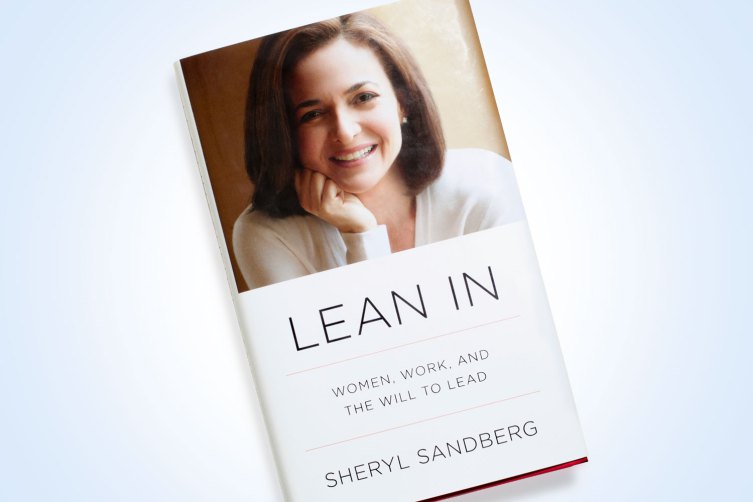
Book review: http://www.nytimes.com/2013/
Some opinions about her: http://www.latimes.com/news/
In general, I think it's not that effective when a super-successful outlier person tells everyone else, "You can be like me." Same goes for books from Obama, Jack Welch, etc. I know Sandberg isn't saying that explicitly, but she is a role model. Sandberg is an amazing story, but got a lot of help and special opportunities (and luck) along the way. Most working women will find themselves under more constraints, even if they are as sharp as Sandberg. I like the part of Sandberg's message that women shouldn't be their own worst enemy and limit themselves from their own fears. If you have a problem with something, stand up and do something about it. I think that advice applies to a lot of men too. All around us are messages and influences that say, "You can't do this, you can't do that, don't stick your neck out, just play it safe." But sometime they're right, because there isn't a 2nd chance if we take the wrong risk. And generally women have less room for error (partly due to our sexist culture). What about all the other Sandberg types who didn't make it big - maybe accidentally pissed off a boss or got pregnant at the "wrong time" or picked a bad company along the way? They had just as much potential and worked just as hard, but the truth is we often don't have much control of our destinies - even in the "meritocracy" of Silicon Valley.
To me, the irony of her message is that all the "bad" habits that Sandberg says women practice that hold them back (being humble & compromising, seeking out a mentor, second guessing - which gets a bad rap but often times saves one from a mistake!), are actually good working (and life) behaviors! Remember how Bush was seen as so much more "decisive" and "bold" than Kerry or Gore? Hitler was decisive and bold too (not implying parity among those leaders!). We know women are generally better human beings than men. It's just that the asshole men that tend to run the world don't do those civil things and take advantage/dismiss people who do. So once again, it's not "passive women" who are the problem, but ultra-aggressive/selfish/
Wednesday, November 30, 2011
The future of digital privacy and Constitutional rights

And clearly this professor isn't a paranoid and alarmist Chicken Little, when major mobile companies are not only monitoring your location 24/7, but recording ALL YOUR KEYSTROKES ALL THE TIME:
http://news.yahoo.com/
When an external party tries to do this to us on our PCs, they call it malware (possibly illegal). When our mobile providers do it without our knowledge, they call it "enhancing the user experience." I'm tired of these big data firms just telling us to "trust them" that they'll use all this info responsibly. And of course we can't expect the gov't to look after our interests on this issue, because they are way behind the tech curve, and the courts tend to side with the corporations and free speech argument. With data mining methods and tech tools only getting smarter and more ubiquitous, where are we headed?
Thursday, November 3, 2011
"The Great Tech War of 2012"

I liked this article about the rivalries between Facebook-Apple-Google-Amazon in the "post-PC world", since these giants are invading each other's traditional territories to capture more customers and revenue. All 4 firms seem to really be leaning on their IT and data mining resources in order to personalize their offerings, understand/predict preferences, and reach more consumers. They are using data to increase usage/consumption, which leads to more customer data being generated, which leads to more insight on how to boost future consumption, and on it goes.
But I think TV is the final frontier that these firms still haven't been able to crack. It's such a big market with entrenched players, different rules, and so many viewers/dollars at stake. We'll see which of them (if any) can best integrate their products with the new web-enabled TV future that they claim is supposed to come soon. And there will also be competition and interference from banks, cable, and telcos, whose infrastructure enables all this online activity and consumption, and who are probably tired of seeing the riches and glory go to Silicon Valley. It will also be interesting to see what disruptive upstarts can put these former startups on the defensive.
I didn't realize that Google bought Android, and didn't develop it in-house. What posers! :)
Who knew that bankers, statisticians, and programmers would eventually rule the world? If you told that to Rockefeller and Carnegie back in the day, they would have choked on their Cuban cigars. And the day is not far off when the Si Valley giants are going to get into defense (probably software, but possibly hardware too!).
Subscribe to:
Posts (Atom)